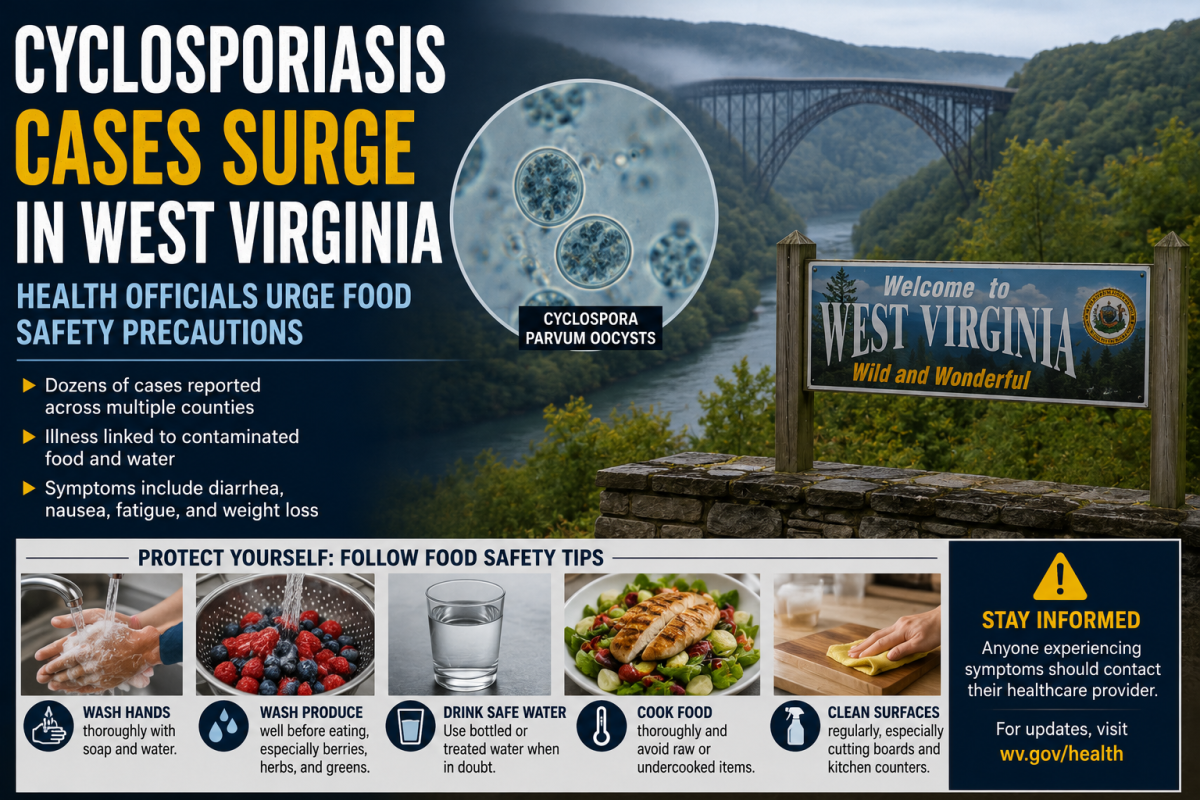
Cyclosporiasis Cases Surge in West Virginia as Health Officials Urge Food Safety Precautions
Health officials in West Virginia are reporting an unusual spike in cyclosporiasis cases, with infections climbing well above the state's typical annual total as investigators continue working to identify the source of the outbreak.
According to the West Virginia Department of Health, the state had 69 confirmed cases of cyclosporiasis as of July 13, a significant increase compared with the roughly nine cases reported during an average year.

Cases Climb Well Above Normal Levels
The rise in infections reflects a broader increase being seen across the United States, though officials have not linked the outbreak to a single food supplier, distributor, or grower.
Jennifer Duckworth, an Infection Preventionist at Raleigh General Hospital, said investigators have been unable to identify one common source because both domestically produced and imported food items have been associated with cases.

What Causes Cyclosporiasis?
Cyclosporiasis is an intestinal illness caused by the parasite Cyclospora cayetanensis. People typically become infected after consuming contaminated food or water, with fresh produce frequently identified as the source in previous outbreaks.
Health officials continue investigating whether a specific food product is contributing to the recent increase in cases.

Common Symptoms to Watch For
Symptoms generally develop after exposure to the parasite and may include:
- Persistent diarrhea
- Nausea
- Vomiting
- Stomach cramps
- Loss of appetite
- Fatigue
Medical experts say prolonged diarrhea is one of the most common signs and can lead to dehydration if left untreated.
Washing Produce Remains the Best Defense
Duckworth said practicing good food hygiene remains one of the most effective ways to reduce the risk of infection.
She recommends thoroughly washing fresh fruits and vegetables before eating them and regularly washing hands during food preparation.
Although cyclosporiasis is not considered a person-to-person contagious illness, proper hygiene can still help reduce exposure to contaminated food.
Treatment and When to Seek Medical Care
Cyclosporiasis is typically treated with a 10- to 14-day course of antibiotics, and most patients recover with appropriate medical care.
Health professionals encourage anyone experiencing persistent diarrhea or stomach illness that does not improve after several days to seek medical evaluation. Early testing can help confirm the infection and ensure patients receive the proper treatment while allowing health officials to better monitor the ongoing outbreak.