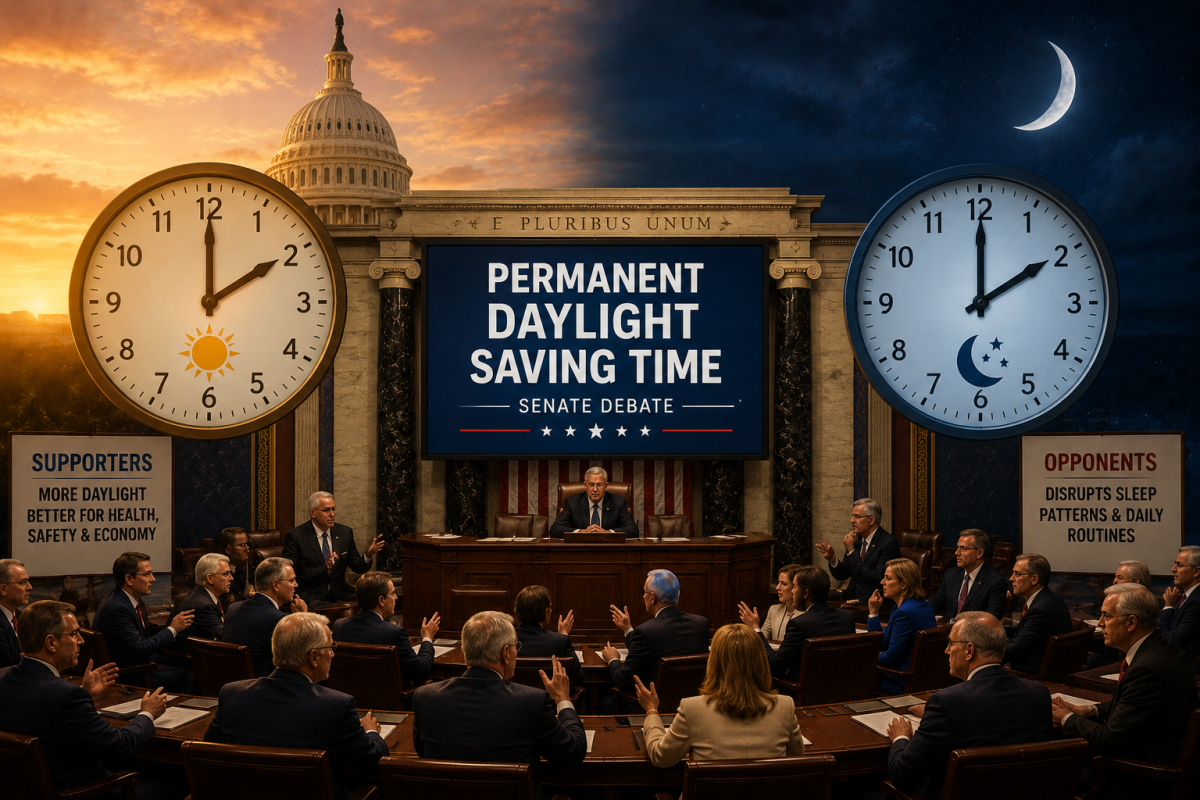
US Senate Debates Permanent Daylight Saving Time as Lawmakers Remain Divided
A proposal to end the twice-yearly clock changes in the United States is once again under consideration in the Senate, but lawmakers remain divided over whether permanent daylight saving time should become the national standard. While the House has already approved the measure, its future in the Senate remains uncertain.
Senate Yet to Reach Consensus
Senate Majority Leader John Thune said discussions among lawmakers are continuing, with no clear indication that the proposal has enough support to pass.
Although the House of Representatives approved the legislation with bipartisan backing, Senate leaders have not announced a timeline for a final vote.
The debate reflects differing opinions over whether keeping daylight saving time year-round would benefit Americans.
What the Bill Would Do
If passed, the legislation would eliminate the practice of changing clocks twice a year.
Instead of returning to standard time each autumn, most of the United States would remain on daylight saving time throughout the year.

Existing legal exemptions for certain states that do not observe daylight saving time would continue to apply under current law.
Supporters argue the change would simplify schedules and provide longer daylight hours during the evening.
Supporters Say Clock Changes Are Outdated
Backers of the proposal argue that switching clocks every spring and autumn disrupts sleep patterns, affects productivity and creates unnecessary inconvenience.
They also point to studies suggesting seasonal clock changes may contribute to workplace fatigue, traffic accidents and other health concerns.
Many supporters believe a permanent system would provide greater consistency for businesses, schools and families.
Critics Raise Concerns Over Winter Mornings
Opponents argue that permanent daylight saving time would lead to significantly later sunrises during winter months.
They warn that children could travel to school in darkness while many workers would begin their day before sunrise.
Some lawmakers believe these safety concerns outweigh the benefits of additional daylight in the evening.
Trump Supports Ending Clock Changes
President Donald Trump has repeatedly voiced support for eliminating the twice-yearly time changes.
However, not all Republican lawmakers share that position.
Several senators have expressed concerns about the practical impact of darker winter mornings, highlighting ongoing divisions within Congress despite widespread public interest in the issue.
Previous Experiment Shapes Today's Debate
The United States has previously experimented with year-round daylight saving time.
That effort was eventually abandoned after public criticism over dark winter mornings and concerns about safety.
Lawmakers continue to reference that experience as they debate whether changing modern work patterns and lifestyles justify adopting permanent daylight saving time today.
Senate Decision Will Determine the Bill's Future
The proposal now depends on whether Senate leaders can build enough support to move the legislation forward.
If approved, it would mark one of the most significant changes to timekeeping in the United States in decades.
Until then, Americans will continue following the current system of changing clocks twice each year while lawmakers weigh the long-running debate over permanent daylight saving time.