US Launches Fresh Airstrikes on Iran as Tehran Responds With Attacks Across Gulf States
The United States carried out a new wave of airstrikes on Iran early Thursday, while Tehran responded with attacks targeting Bahrain, Kuwait and Qatar, escalating tensions across the Persian Gulf and raising fresh doubts over an interim agreement aimed at ending the conflict.
The latest exchange came just hours after U.S. President Donald Trump declared that recent Iranian attacks on commercial shipping in the Strait of Hormuz had effectively ended the fragile ceasefire between the two sides. The renewed military action marks one of the most significant escalations since the conflict began earlier this year.
The strikes have renewed concerns that the fighting could spread further across the Middle East, disrupting regional security and threatening one of the world's most important energy shipping routes.
Why did the United States launch new strikes?
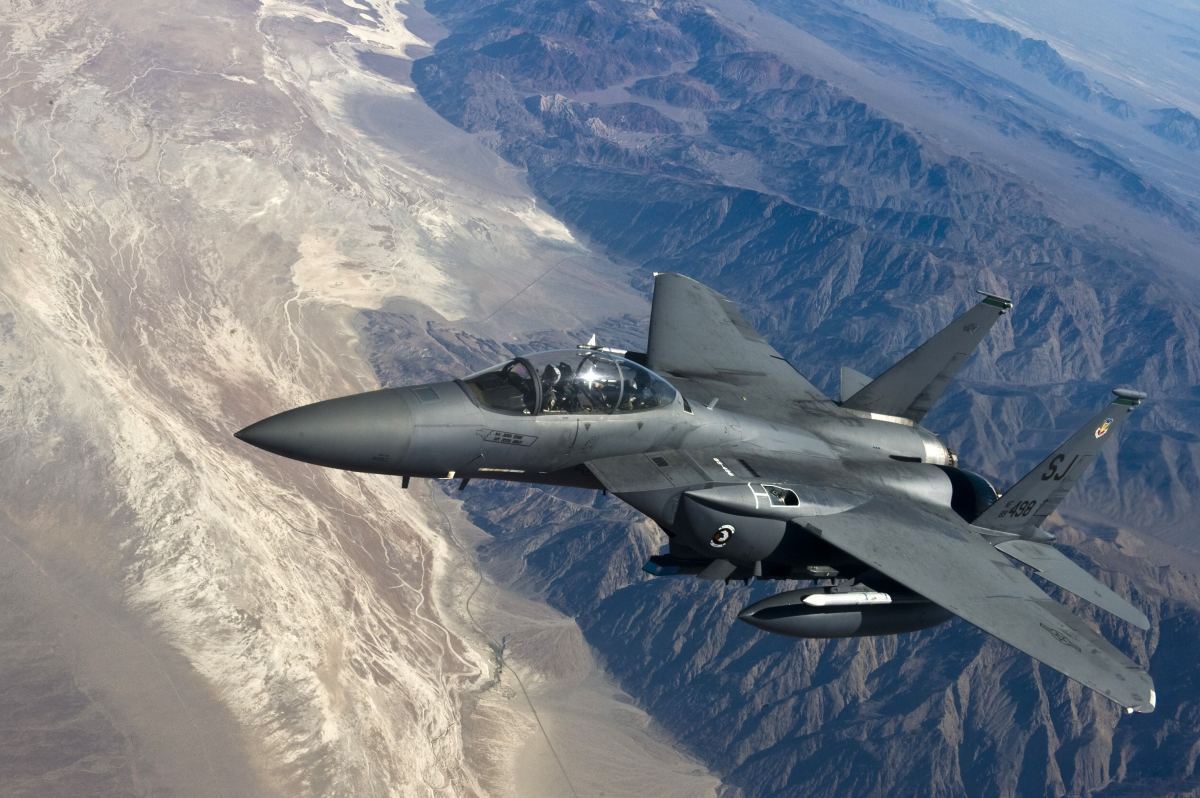
The U.S. military said the latest operation was intended to weaken Iran's ability to threaten international shipping through the Strait of Hormuz.
According to U.S. military officials, the strikes targeted military installations and port facilities linked to Iran's operations in the region. Officials said the objective was to "further degrade" Iran's capability to threaten freedom of navigation through the strategic waterway.
The latest operation followed Iranian attacks on several merchant vessels near the coast of Oman, which Washington cited as the reason for its renewed military response.
How did Iran respond?
Iran retaliated by launching attacks toward Bahrain, Kuwait and Qatar, significantly expanding the scope of the confrontation.
Air raid sirens sounded at least twice in Bahrain, which hosts the headquarters of the U.S. Navy's Fifth Fleet. Kuwait's military said it was intercepting incoming drones and missiles, while Iran's Islamic Revolutionary Guard Corps claimed responsibility for attacks targeting Bahrain and Kuwait.
There were no immediate reports of significant damage or casualties in the three Gulf states.
Which locations inside Iran were targeted?
Iranian state media reported explosions across multiple locations following the U.S. strikes.
Among the reported targets were Bushehr, home to Iran's nuclear power plant complex, along with the southern port cities of Chabahar, Konarak, Bandar Abbas and Sirik.
Authorities in Iranshahr said one firefighter was killed after an airport was struck.
State media also reported attacks on transportation infrastructure, including a railway bridge in Golestan province. The Revolutionary Guard separately said two bridges leading toward Mashhad had been hit as preparations continued for the burial of former Supreme Leader Ayatollah Ali Khamenei.
What did Donald Trump say?
President Donald Trump said the U.S. strikes were retaliation for Iran's attacks on commercial shipping and warned that further Iranian actions would trigger an even stronger response.
In a post on social media, Trump wrote:
"This is in retribution for yesterday's bombing of ships by Iran. If it happens again, it will get much worse!"
Earlier, Trump suggested that while negotiations could continue, he believed the ceasefire had effectively collapsed.
He said:
"Anything that happens is going to happen very fast."
Trump also indicated the U.S. military could "just finish the job" and repeated previous threats to target Iranian civilian infrastructure and seize Kharg Island, Iran's principal oil export hub.
Why are fears of a wider war growing?
The latest military exchange has renewed concerns that diplomatic efforts to end the conflict may be failing.
Trump said he believed the interim ceasefire was effectively over, although he left the door open for continued negotiations.
Speaking about diplomacy, Trump said:
"For me, I think it's over."
He added:
"They can talk, but I think they're wasting their time."
Iranian Deputy Foreign Minister Kazem Gharibabadi rejected Trump's assessment, saying on social media that the comments reflected "not a sign of power but an admission of the failure" of U.S. policy toward Iran.
The renewed fighting has also increased concerns over energy security. The Strait of Hormuz remains one of the world's most critical shipping routes for oil and natural gas, and any prolonged disruption could have significant economic consequences worldwide.
Analysts have suggested the latest attacks may also reflect divisions within Iran's leadership. While some officials continue to support negotiations aimed at permanently ending the conflict, others favor maintaining pressure by asserting greater control over the strategic waterway.
Negotiations on a broader peace agreement had been expected to begin following the funeral ceremonies for Ayatollah Ali Khamenei, but the renewed military exchanges have cast uncertainty over those plans.
Questions About the Latest US-Iran Strikes
Why did the United States strike Iran again?
The U.S. said the operation was a response to Iranian attacks on merchant ships near the Strait of Hormuz and aimed to reduce Iran's military ability to threaten international shipping.
Which Gulf countries were targeted?
Iran launched attacks toward Bahrain, Kuwait and Qatar following the U.S. airstrikes. Bahrain and Kuwait reported defensive operations against incoming drones and missiles.
Is the ceasefire still in place?
President Donald Trump said he believes the interim ceasefire has effectively ended, although diplomatic negotiations have not been formally abandoned.
Why is the Strait of Hormuz important?
The Strait of Hormuz is one of the world's busiest energy shipping routes, carrying a significant share of globally traded oil and natural gas. Any disruption can affect international energy markets and global trade.
The latest military exchange underscores the fragile state of diplomacy between Washington and Tehran. With negotiations still technically possible but hostilities intensifying, regional governments and international partners are closely watching whether the conflict expands further or returns to the negotiating table.