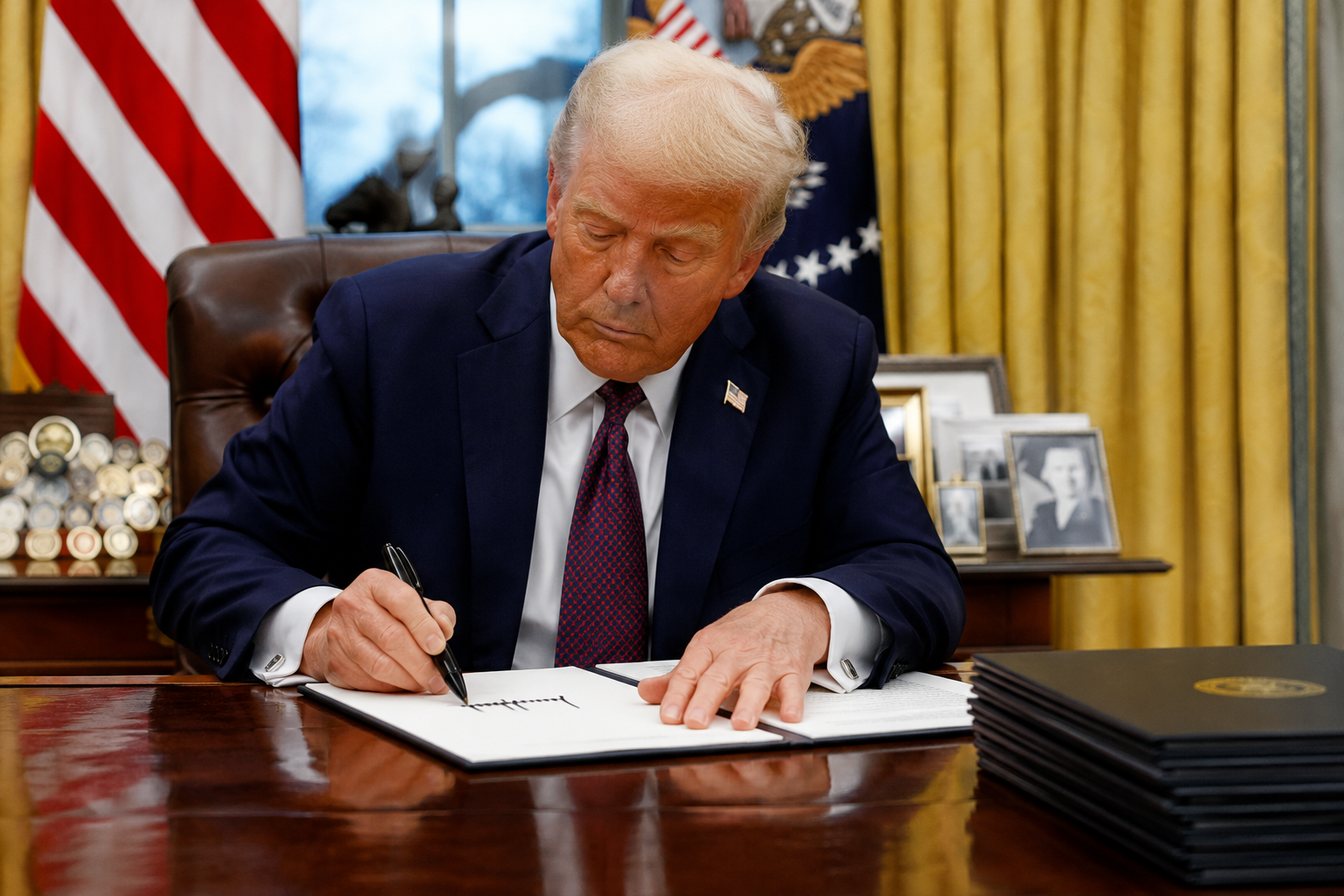
Trump Signs New Executive Orders Targeting Birthright Citizenship After Supreme Court Setback
President Donald Trump has signed two new executive orders aimed at narrowing birthright citizenship and cracking down on birth tourism, marking a renewed effort after the U.S. Supreme Court rejected his previous executive order in June. The administration says the new measures are more limited in scope and designed to address specific categories rather than broadly ending birthright citizenship.
Summary: Trump has launched a second attempt to limit birthright citizenship through narrower executive orders, but the new actions are already expected to face legal challenges over the Constitution's 14th Amendment.
What's Different This Time?
Unlike the earlier executive order that sought broader restrictions, the new order targets specific groups of children born in the United States.
According to the White House, the order would deny automatic U.S. citizenship to certain categories, including:
-
Children of individuals classified as "alien enemies."
-
Children of certain foreign government employees, diplomats, or representatives of foreign organizations who are not fully subject to U.S. jurisdiction.
-
Children whose parents allegedly participated in fraudulent citizenship schemes, including organized birth tourism operations.
The administration argues these categories fall outside the traditional interpretation of the Constitution's citizenship protections.
Administration Also Targets Birth Tourism
A second executive order directs the State Department and the Department of Homeland Security (DHS) to strengthen efforts against birth tourism.
The administration said federal agencies will tighten visa screening and increase enforcement against commercial operations that help foreign nationals travel to the United States primarily to give birth so their children receive U.S. citizenship.
Birth tourism refers to people entering the U.S. mainly for the purpose of giving birth. According to the Migration Policy Institute, an estimated 26,000 births each year may involve birth tourism out of approximately 3.5 million annual births in the United States.
Why Is Birthright Citizenship Being Challenged?
Trump said birthright citizenship has become an incentive for illegal immigration and organized birth tourism. He described the Supreme Court's earlier decision as "unfortunate" and said the administration was "making adjustments" instead of repeating the same legal approach.
White House Deputy Chief of Staff Stephen Miller called the new orders an effort to close what the administration considers a long-standing loophole.
Direct Answer: The Trump administration argues the new executive orders target specific situations involving fraud, foreign government affiliations, and birth tourism rather than broadly ending birthright citizenship.
Why Are Legal Challenges Expected?
The new orders are likely to face immediate court challenges.
The American Civil Liberties Union (ACLU) argued that the Supreme Court has already reaffirmed that birthright citizenship is protected under the 14th Amendment, which states that people born in the United States and "subject to the jurisdiction thereof" are U.S. citizens.
Many constitutional scholars maintain that this protection applies broadly, with only limited, well-established exceptions such as children born to foreign diplomats.
The Supreme Court's June ruling rejected Trump's earlier executive order, with reports indicating that five justices concluded birthright citizenship is constitutionally protected. Justice Brett Kavanaugh reportedly based his opinion on federal statutory law rather than the constitutional question itself.
What Happens Next?
The executive orders do not immediately change U.S. citizenship law. Instead, they are expected to trigger another round of federal court litigation over whether the administration's narrower approach complies with the Constitution and existing Supreme Court precedent.
The outcome of those legal challenges will ultimately determine whether the new restrictions can take effect or are blocked by the courts.