Trump Seeks Supreme Court Rehearing After Birthright Citizenship Ruling
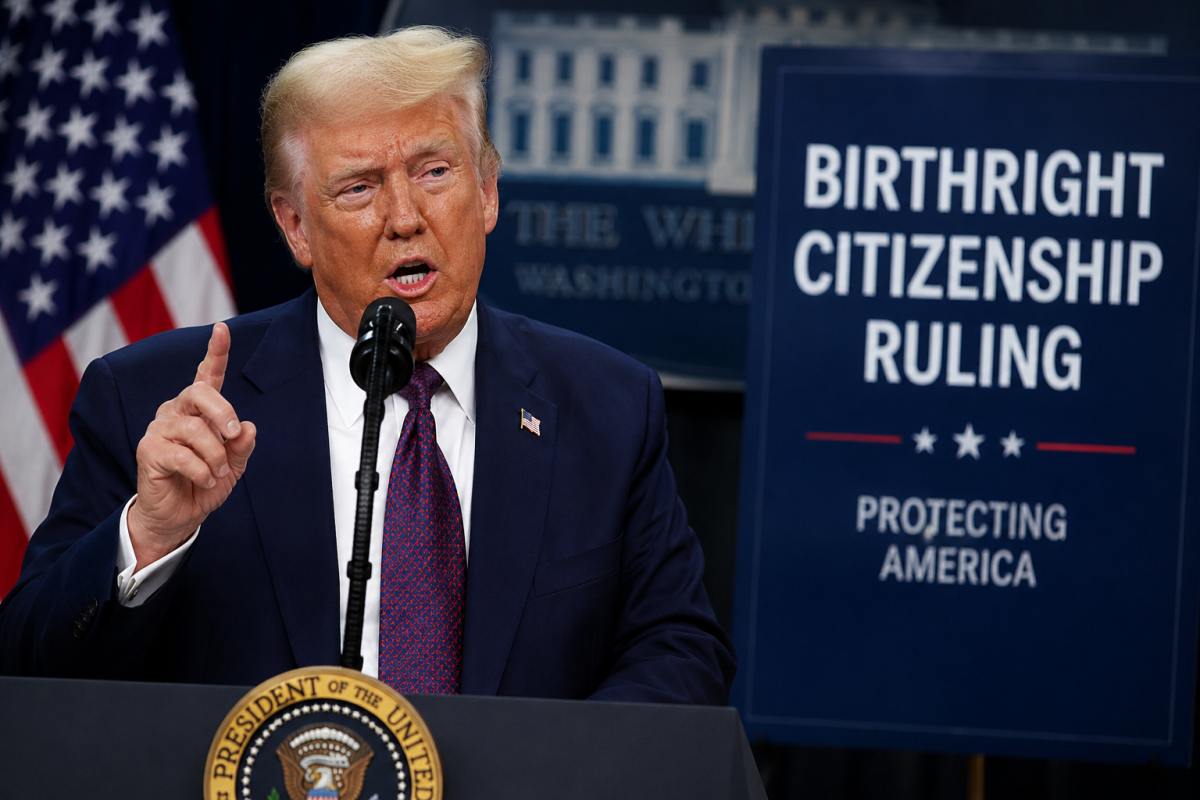
President Donald Trump said he will immediately ask the U.S. Supreme Court to reconsider its recent decision affirming birthright citizenship, continuing his effort to overturn a constitutional interpretation that has guaranteed automatic U.S. citizenship to most people born in the country for more than 150 years.
The announcement comes one week after the Supreme Court ruled that children born in the United States are citizens under the 14th Amendment, rejecting Trump's executive order that sought to restrict birthright citizenship for children of undocumented immigrants and certain temporary visitors.
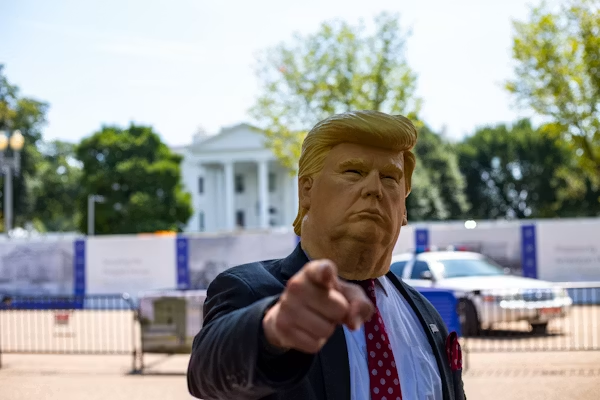
Although Supreme Court rules allow parties to request a rehearing, such requests are rarely granted.
Why is Trump asking the Supreme Court to reconsider?
Trump said he plans to seek a rehearing because he strongly disagrees with the court's decision.

In a post on social media, he wrote:
"This miscarriage of justice will destroy America if they don't change their absolutely insane decision."

Under Supreme Court rules, a losing party may file a petition for rehearing within 25 days of a ruling. A majority of the court's nine justices must vote in favour before a rehearing is granted.
Historically, the Supreme Court has rarely agreed to rehear cases, with such decisions occurring only in exceptional circumstances.
What did the Supreme Court decide?
In a 6-3 ruling issued on June 30, the Supreme Court held that children born in the United States to parents who are unlawfully or temporarily present are citizens at birth under the 14th Amendment of the U.S. Constitution.
Writing for the majority, Chief Justice John Roberts stated:
"Children born in the United States to parents unlawfully or temporarily present are citizens at birth."
Justice Brett Kavanaugh also wrote separately, stating that he believed Trump's executive order conflicted with federal law.
The ruling represented a significant setback for the Trump administration's immigration agenda and was welcomed by civil rights organisations.
Why did Trump challenge birthright citizenship?
Trump sought to end automatic citizenship for children born to undocumented immigrants and certain temporary visa holders through an executive order.
His administration argued that such children were not fully "subject to the jurisdiction" of the United States, language contained in the 14th Amendment.
The Supreme Court rejected that interpretation, concluding that the executive order violated constitutional protections governing citizenship by birth.
Could birthright citizenship still change?
Following the ruling, Trump indicated he would continue pursuing legislative options to limit birthright citizenship.
Any change through legislation would require approval by both chambers of Congress before becoming law.
Because birthright citizenship is rooted in the Constitution, any attempt to fundamentally alter the policy could also face additional legal challenges.
What is birthright citizenship?
Birthright citizenship is the legal principle that grants U.S. citizenship to nearly everyone born on American soil.
The right has existed since the 14th Amendment was ratified in 1868 following the Civil War and has been reaffirmed through multiple Supreme Court decisions over the past century.
It remains one of the foundational principles of U.S. constitutional law.
Questions About Trump's Birthright Citizenship Appeal
Can the Supreme Court rehear the case?
Yes. Supreme Court rules allow parties to request a rehearing, but such requests are rarely granted and require approval from a majority of the justices.
What did the Supreme Court rule?
The Court held that children born in the United States are citizens under the 14th Amendment, including those born to parents who are unlawfully or temporarily present.
Why did Trump oppose birthright citizenship?
Trump argued that children of undocumented immigrants and certain temporary visitors should not automatically receive U.S. citizenship under the Constitution.
Can Congress change birthright citizenship?
Trump has said he will pursue legislation, but any proposal would require congressional approval and could face constitutional challenges because the policy is based on the 14th Amendment.
Trump's planned petition keeps the legal debate over birthright citizenship in the national spotlight, even though Supreme Court rehearings are uncommon. Whether through another court challenge or congressional action, the issue is likely to remain a central part of the broader immigration debate in the months ahead.