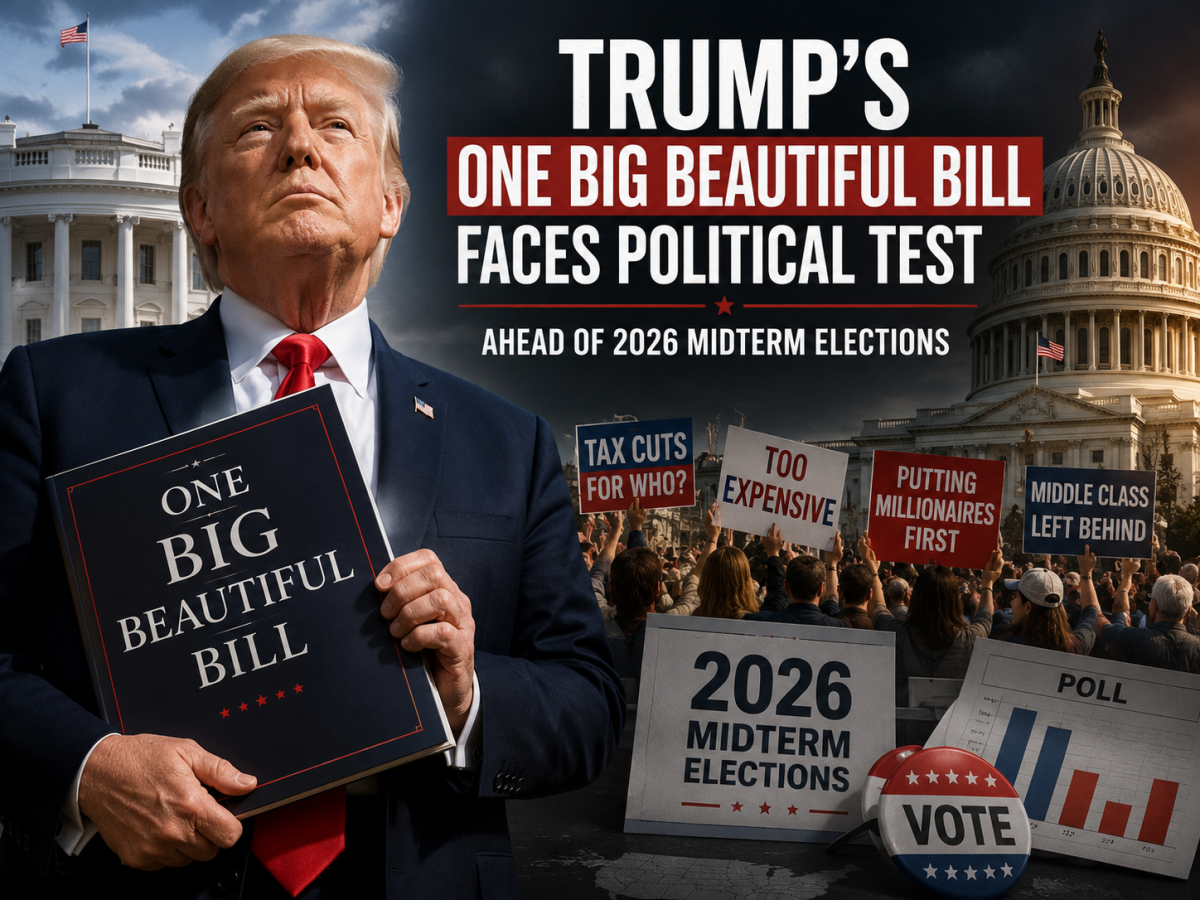
Trump's Signature Domestic Law Faces a New Political Test Ahead of the 2026 Midterms
One year after President Donald Trump signed the One Big Beautiful Bill Act into law, the sweeping package has become a central issue in the fight for control of Congress. While Republicans continue to promote their tax relief and pro-business provisions, Democrats are campaigning aggressively against their cuts to Medicaid and federal nutrition programs, setting up one of the defining policy battles of the 2026 midterm elections.
The legislation was celebrated by Republicans when it became law on July 4, 2025, and was widely viewed as the centerpiece of Trump's second-term domestic agenda. Twelve months later, however, the debate has shifted from legislative victory to political liability, particularly in competitive House and Senate races where healthcare and household costs remain top voter concerns.

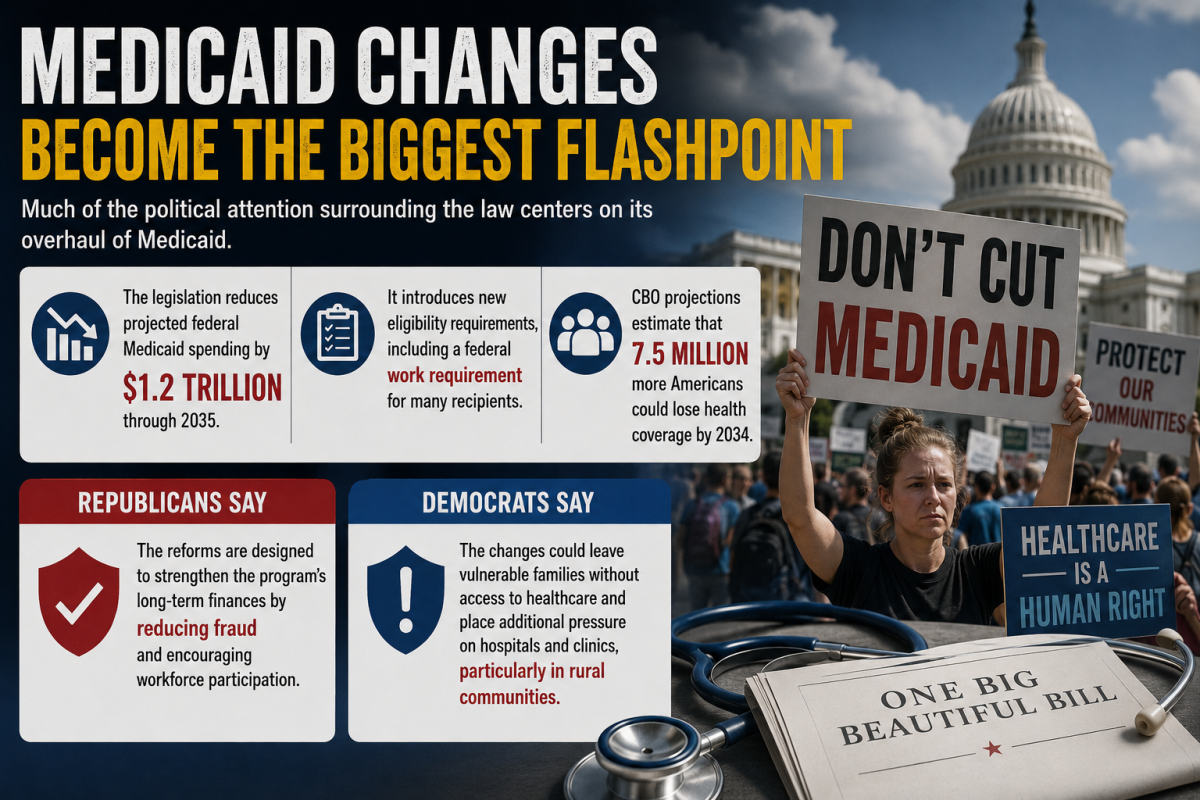
Medicaid Changes Become the Biggest Flashpoint
Much of the political attention surrounding the law centers on its overhaul of Medicaid.
The legislation reduces projected federal Medicaid spending by roughly $1.2 trillion through 2035 while introducing new eligibility requirements, including a federal work requirement for many recipients. The Congressional Budget Office projects that 7.5 million more Americans could lose health coverage by 2034 under the changes.
Republicans argue the reforms are designed to strengthen the program's long-term finances by reducing fraud and encouraging workforce participation. Democrats, meanwhile, say the changes could leave vulnerable families without access to healthcare and place additional pressure on hospitals and clinics, particularly in rural communities.
Rural Healthcare Emerges as a Battleground Issue
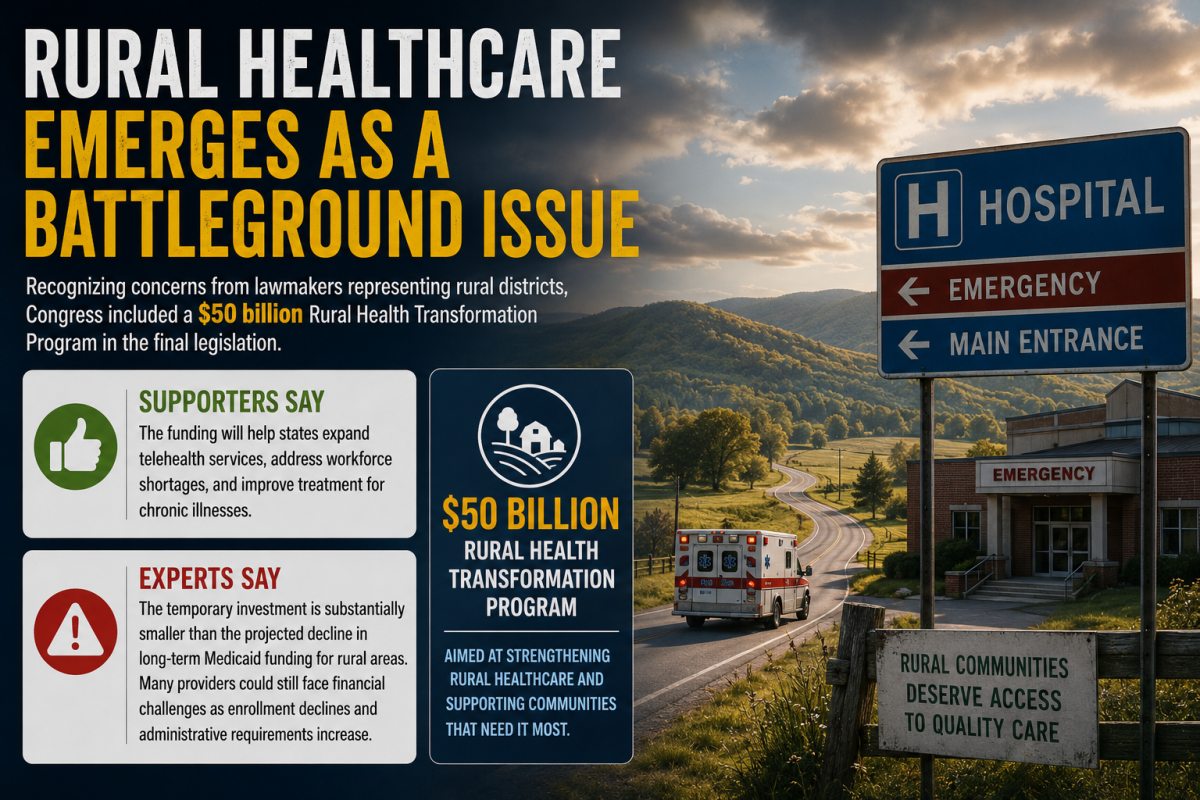
Recognizing concerns from lawmakers representing rural districts, Congress included a $50 billion Rural Health Transformation Program in the final legislation.

Supporters say the funding will help states expand telehealth services, address workforce shortages, and improve treatment for chronic illnesses.
Healthcare experts, however, note that the temporary investment is substantially smaller than the projected decline in long-term Medicaid funding for rural areas. Analysts warn many providers could still face financial challenges as enrollment declines and administrative requirements increase.
Republicans Highlight Tax Relief for Workers
While Democrats focus on healthcare, Republicans are emphasizing the law's tax provisions.
Among the most frequently promoted measures are tax breaks on qualifying overtime pay and tips, policies Trump repeatedly championed during the 2024 campaign.
Republican lawmakers campaigning in manufacturing and service-sector districts say those provisions have resonated with hourly employees, construction workers, and hospitality staff who often rely on overtime or tipped income.
Supporters also point to incentives designed to encourage business investment and expand domestic manufacturing.
Democrats Question Who Benefits Most
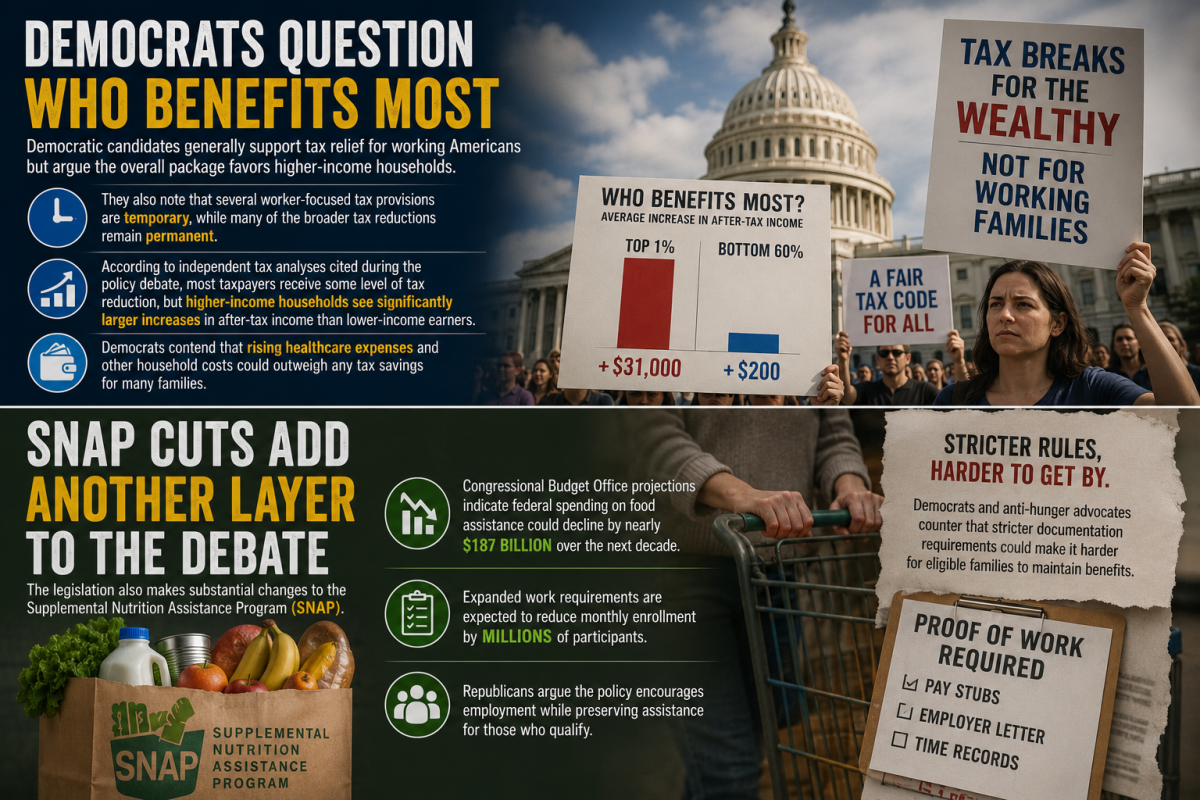
Democratic candidates generally support tax relief for working Americans but argue the overall package favors higher-income households.
They also note that several worker-focused tax provisions are temporary, while many of the broader tax reductions remain permanent.
According to independent tax analyses cited during the policy debate, most taxpayers receive some tax relief, but higher-income households see significantly larger increases in after-tax income than lower-income households.
Democrats contend that rising healthcare expenses and other household costs could outweigh any tax savings for many families.
SNAP Cuts Add Another Layer to the Debate
The legislation also makes substantial changes to the Supplemental Nutrition Assistance Program (SNAP).
Congressional Budget Office projections indicate federal spending on food assistance could decline by nearly $187 billion over the next decade, with expanded work requirements expected to reduce monthly enrollment by millions of participants.
Republicans argue the policy encourages employment while preserving assistance for those who qualify. Democrats and anti-hunger advocates counter that stricter documentation requirements could make it harder for eligible families to maintain benefits.
Competitive Districts Turn the Law Into a Campaign Issue
Candidates from both parties are already making the legislation a centerpiece of their campaigns in closely contested districts across states, including Michigan, Wisconsin, Iowa, Arizona, Nevada, and California.
Republicans are framing the law as proof of their commitment to lower taxes, economic growth, and government efficiency.
Democrats are focusing on healthcare coverage, food assistance, and the impact the legislation could have on working families and rural communities.
With control of the House likely to hinge on a relatively small number of competitive races, both parties view the law as a defining issue that could influence turnout and voter sentiment.
Political Impact May Be Determined by Voters
Although Republicans continue defending the legislation as a long-term economic investment, Democrats have sought to portray it as a measure that prioritizes tax cuts over social safety-net programs.
Public opinion remains divided, and both parties are investing heavily in advertising and voter outreach to shape how Americans view the law before November.
As the 2026 midterm campaign intensifies, Trump's signature legislative achievement has evolved from a governing milestone into one of the most closely watched political issues of the election cycle.