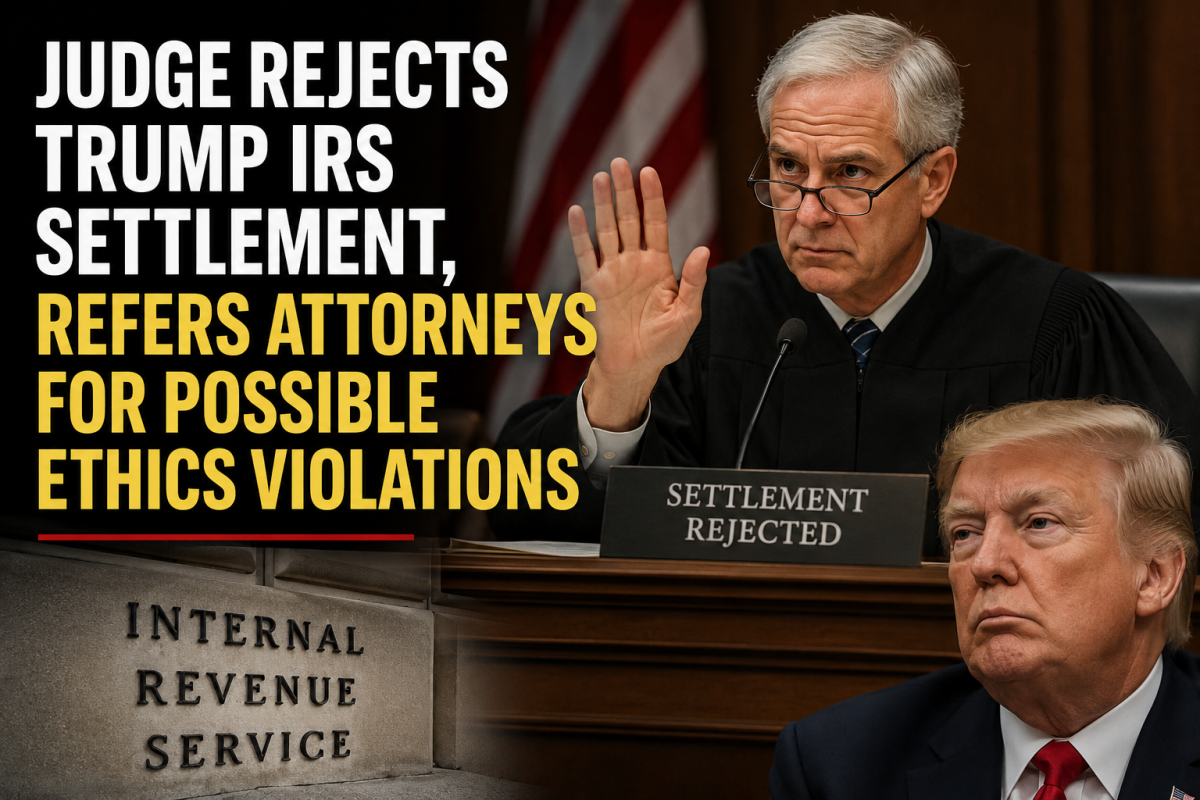
Judge Rejects Trump IRS Settlement, Refers Attorneys for Possible Ethics Violations
A federal judge has ruled that President Donald Trump's $10 billion lawsuit against the Internal Revenue Service (IRS) improperly used the court system to secure personal benefits, blocking a controversial settlement and referring several attorneys to legal disciplinary authorities for possible ethics violations.
In a 56-page decision issued Monday, U.S. District Judge Kathleen Williams concluded that the settlement negotiated between Trump's private legal team and officials within his own administration failed to meet the legal standards required in civil litigation because the parties were not genuinely operating as opposing sides.

Judge Blocks Settlement From Taking Effect
The ruling prevents the settlement reached in May from becoming legally enforceable.
Judge Williams determined that the agreement was not intended to resolve a legitimate legal dispute but instead sought judicial approval for measures that would primarily benefit Trump and individuals associated with him.

She also prohibited Trump, his companies, and other parties involved in the lawsuit from citing or relying on the settlement in future legal proceedings.
Court Questions Independence of Both Legal Teams
Williams sharply criticized both Trump's personal attorneys and lawyers representing the Department of Justice (DOJ) and the IRS, concluding that they worked toward the same objective rather than representing opposing legal interests.

The judge referred Trump attorney Alejandro Brito along with senior Justice Department officials who approved the agreement to state bar authorities for potential disciplinary review over possible violations of professional ethics rules.
Lawsuit Centered on Leaked Tax Records
Trump filed the lawsuit against the IRS in January, seeking $10 billion in damages and alleging the agency failed to prevent the disclosure of his tax records during his first presidential term.
The proposed settlement included several significant provisions, including expanded tax protections for Trump and the creation of a nearly $1.8 billion fund intended to compensate individuals claiming they were victims of government "weaponization."
Critics argued the proposed fund could primarily benefit Trump's political allies.
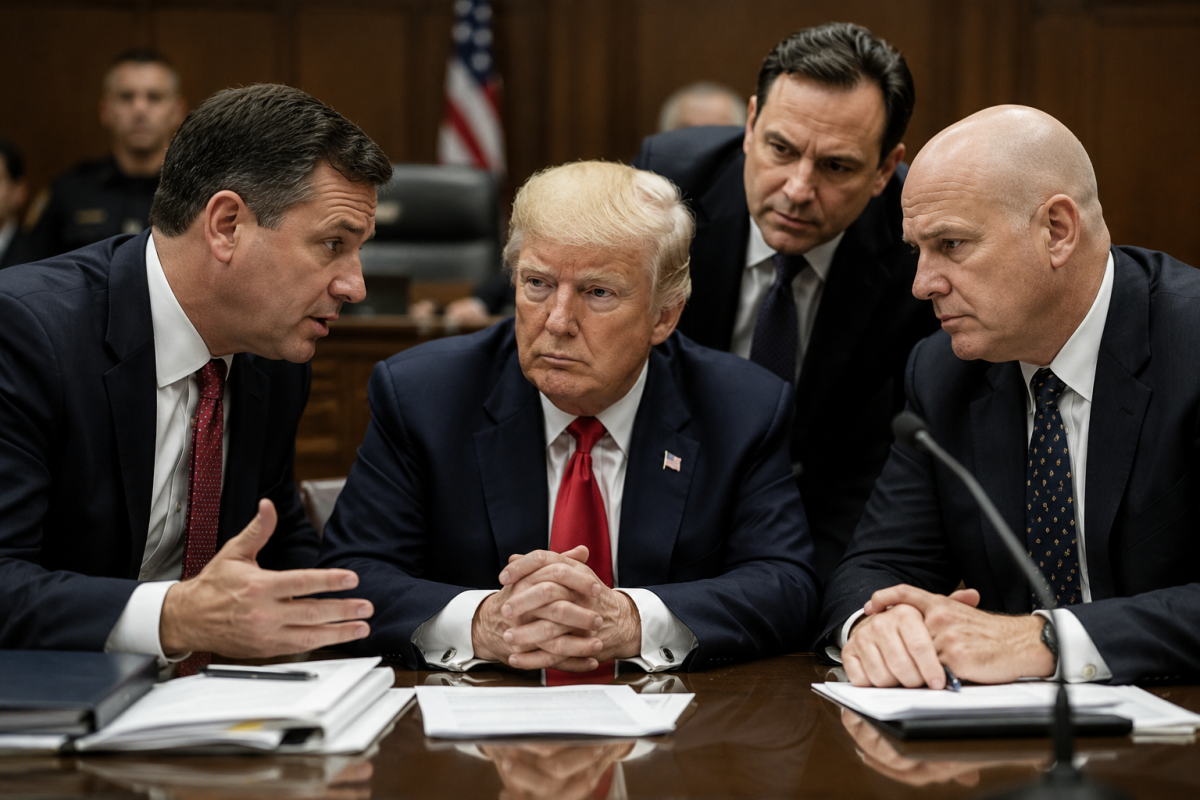
Administration Had Already Scaled Back Settlement Plans
Acting Attorney General Todd Blanche previously informed Congress that the proposed compensation fund would not move forward after facing bipartisan scrutiny and a separate federal court ruling blocking its creation.
However, portions of the tax-related agreement remained under review until Judge Williams issued Monday's decision.
The ruling now casts doubt over provisions that would have limited future IRS audits involving Trump and his business interests.
Ethics Referrals Add New Pressure
Williams ordered copies of her ruling sent to legal disciplinary authorities in New York and Washington, D.C., where the attorneys involved are licensed to practice law.
Her decision does not reopen the underlying lawsuit but allows outside organizations that challenged the settlement to seek reimbursement for legal costs incurred during the case.
Trump Legal Team Defends Lawsuit
A spokesperson for Trump's legal team did not directly address the judge's findings but reiterated that the president believes his confidential tax information was improperly disclosed and remains committed to holding those responsible accountable.
The Justice Department did not immediately comment on the ruling.
Decision Comes Ahead of Key Senate Hearing
The court's decision arrives just days before Acting Attorney General Todd Blanche is scheduled to appear before a Senate committee considering his nomination to become the permanent U.S. attorney general.
Lawmakers are expected to question Blanche about the IRS settlement and the Justice Department's role in negotiating the agreement as the legal and political fallout from the ruling continues.