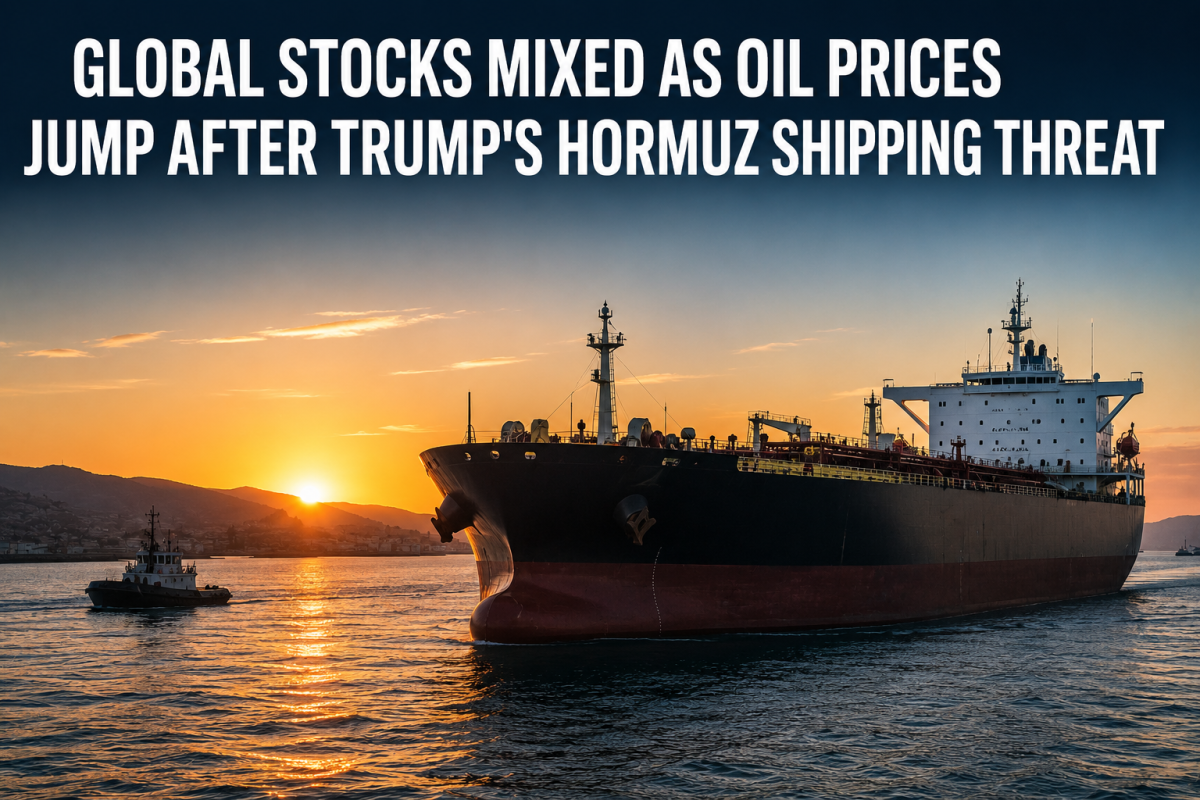
Stocks Mixed as Oil Climbs on Trump’s Hormuz Fee Proposal and Iran Tensions
Global markets traded cautiously Tuesday as investors weighed surging oil prices, renewed tensions between the United States and Iran, and the start of second-quarter earnings season. Stocks were mixed across major markets after President Donald Trump announced plans to reinstate a blockade of Iranian shipping and proposed a 20% fee on cargo moving through the Strait of Hormuz.
The developments pushed energy prices higher while adding fresh uncertainty to financial markets already focused on inflation data and the Federal Reserve's next policy decision.
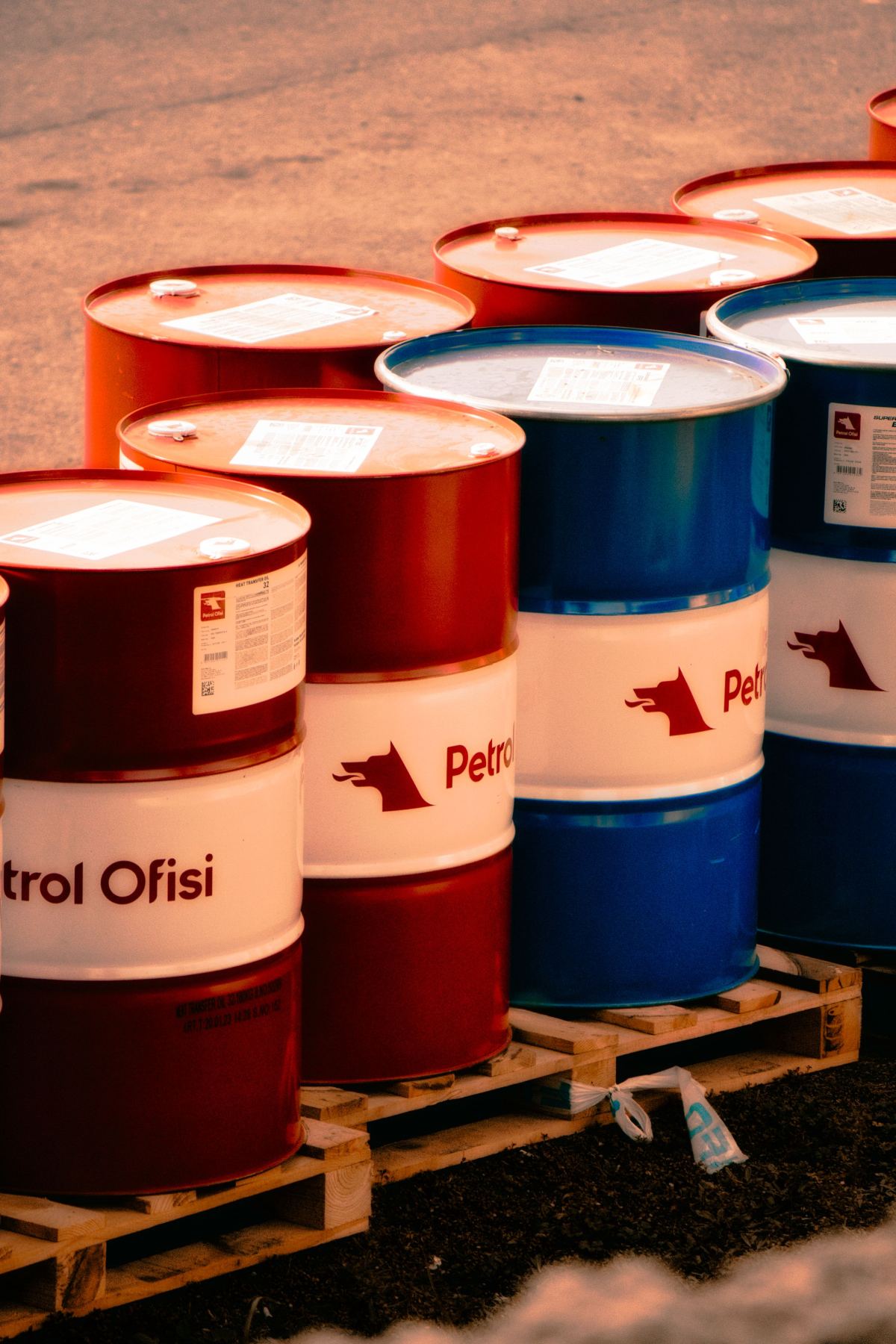
Oil Prices Jump as Hormuz Risks Return
Brent crude futures climbed nearly $2.80 to around $86.19 per barrel, reaching their highest level since mid-June. U.S. West Texas Intermediate crude also gained about $1.60 to $79.78 per barrel.
The rally followed overnight U.S. military strikes against Iran and Trump's announcement that the United States would resume a blockade of Iranian shipping while introducing a proposed 20% cargo levy for vessels transiting the Strait of Hormuz.

The strategic waterway remains one of the world's most important energy corridors, handling a significant share of global crude oil and liquefied natural gas shipments.
Stock Markets Turn Mixed as Investors Assess Risks
U.S. equity futures showed mixed performance in early trading.

-
S&P 500 futures slipped about 0.1%
-
Nasdaq futures gained approximately 0.5%

European markets opened lower, with the STOXX Europe 600 Index falling around 0.4% as investors reacted to geopolitical developments and corporate earnings reports.
Travel and leisure stocks were among the weakest performers as higher fuel prices raised concerns about operating costs.

Earnings Season Adds Another Layer of Uncertainty
Investors also continued evaluating second-quarter earnings from major global companies, including financial institutions and European corporations.
Market participants are watching earnings closely to determine whether geopolitical uncertainty and higher borrowing costs are beginning to weigh more heavily on corporate profitability.

Analysts say upcoming results from large U.S. companies could help determine whether equity markets can maintain their recent momentum.
Fed Rate Outlook Remains in Focus
Markets were also influenced by comments from Federal Reserve Governor Christopher Waller, who suggested the central bank may need to raise interest rates in the near term if inflation remains above its target.
Attention now turns to the latest U.S. Consumer Price Index (CPI) report and congressional testimony from Federal Reserve Chair Kevin Warsh, both of which could shape expectations ahead of the Fed's July 28–29 policy meeting.
Current market pricing implies roughly a 40% probability of a 25-basis-point interest rate increase later this month.
Treasury yields moved higher, with the 2-year U.S. Treasury yield rising to approximately 4.26%, its highest level since February 2025, while the 10-year yield climbed to about 4.61%.
Asian Markets Deliver Mixed Performance
Asian trading was uneven despite stronger-than-expected Chinese trade data.
China's CSI 300 Index rose more than 2% after June export and import figures exceeded economists' forecasts, suggesting continued resilience in global demand for Chinese goods.
South Korea's benchmark index also posted gains, while Taiwan's stock market fell more than 1%, reflecting continued pressure on technology shares.
Gold and Bitcoin Edge Higher
Safe-haven demand supported precious metals, with gold climbing around 0.7% as investors sought protection against geopolitical uncertainty.
The U.S. dollar index eased slightly despite remaining near its highest level of the month, while Bitcoin traded modestly higher as cryptocurrency markets stabilized following recent volatility.
Investors Watch Three Key Market Drivers
Financial markets are expected to remain highly sensitive in the coming days as investors monitor three major catalysts:
-
Escalating tensions between the United States and Iran, particularly developments affecting the Strait of Hormuz.
-
Second-quarter corporate earnings, which will provide insight into business conditions across major industries.
-
U.S. inflation data and Federal Reserve policy signals that could determine the direction of interest rates for the remainder of the year.
With energy prices rising and geopolitical risks intensifying, traders are preparing for continued volatility across global equity, commodity and fixed-income markets.