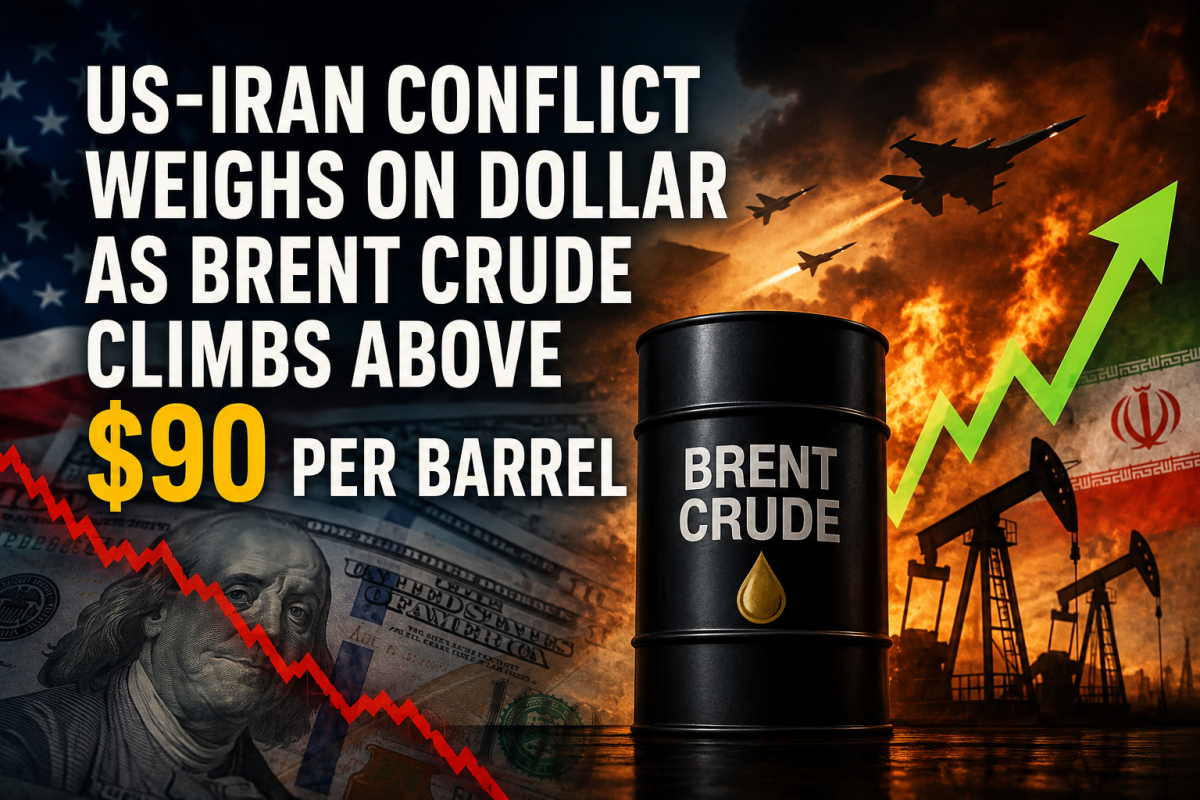
US-Iran Conflict Weighs on Dollar as Brent Crude Climbs Above $90 Per Barrel
The U.S. dollar eased in Asian trading on Monday as investor confidence improved despite escalating tensions between the United States and Iran. Meanwhile, Brent crude oil surged above $90 per barrel after renewed military action in the Middle East raised concerns about global energy supplies and market stability.
Dollar Retreats After Three-Day Rally
The U.S. dollar slipped modestly during Asian trading, ending a three-session winning streak fueled by heightened geopolitical tensions.
The U.S. Dollar Index (DXY), which measures the greenback against a basket of six major currencies, fell 0.1% to 100.69 as investors gradually returned to riskier assets.
Market sentiment improved despite ongoing uncertainty surrounding the Middle East conflict.

Risk-Sensitive Currencies Recover
Several major currencies gained ground against the dollar as investors showed renewed appetite for higher-risk assets.
-
The euro rose 0.1% to $1.1444.
-
The British pound gained 0.1% to $1.3463.
-
The Australian dollar climbed 0.2% to $0.6996.
-
The New Zealand dollar advanced 0.3% to $0.5858.
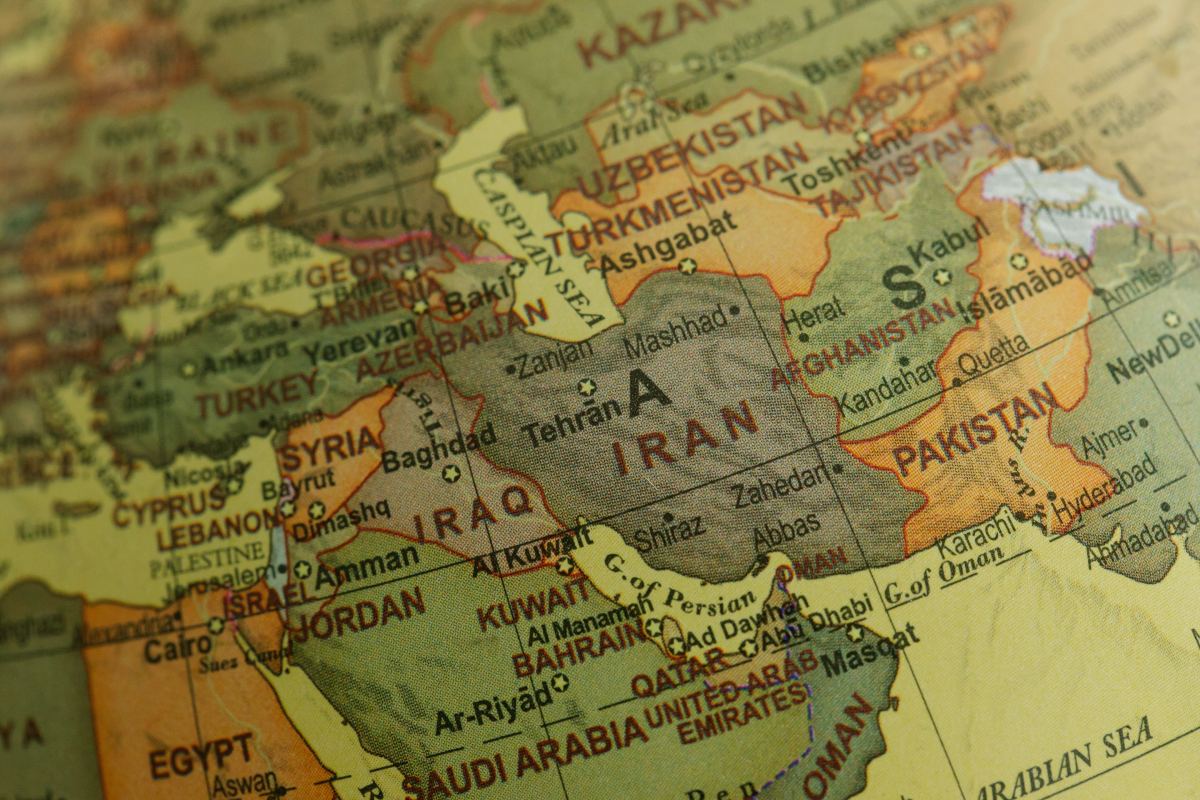

The Japanese yen remained largely unchanged against the dollar due to reduced trading activity during Japan's Marine Day holiday.
Brent Crude Surges Above $90
Oil prices moved sharply higher after renewed military operations involving the United States and Iran increased fears of potential supply disruptions.
Brent crude futures climbed 2.6% to $90.37 per barrel, marking one of the strongest gains in recent weeks as traders reacted to growing geopolitical risks in the Middle East.
Energy markets continue to closely monitor developments that could affect shipping routes and oil production across the region.
Middle East Tensions Continue to Influence Markets
Investor sentiment remains heavily influenced by developments in the Middle East.
Recent military operations and ongoing security concerns have increased demand for traditional safe-haven assets while also supporting higher crude oil prices due to concerns about possible disruptions to global energy supplies.
Markets are expected to remain volatile as geopolitical events unfold.
China Holds Benchmark Lending Rates Steady
China's central bank kept its benchmark lending rates unchanged for the 14th consecutive month, matching market expectations.
Following the announcement, the offshore Chinese yuan strengthened slightly, with the U.S. dollar declining 0.1% against the currency.
The decision reflected Beijing's cautious approach toward monetary policy amid a mixed economic recovery.
Investors Focus on Federal Reserve Meeting
Attention is now turning to the Federal Reserve's upcoming policy meeting scheduled for July 29.
Interest-rate futures indicate that investors overwhelmingly expect policymakers to leave rates unchanged, although several Federal Reserve officials have recently suggested that inflation remains a concern and further tightening could still be considered if price pressures persist.
The meeting is expected to provide additional guidance on the future direction of U.S. monetary policy.
Cryptocurrency Market Edges Higher
Digital assets posted modest gains alongside improving market sentiment.
-
Bitcoin rose 0.2% to approximately $64,638.
-
Ether gained 0.4% to around $1,873.
Cryptocurrency markets largely tracked the broader recovery in investor risk appetite.
Markets Remain Focused on Geopolitical Risks
While financial markets showed signs of stabilization after recent volatility, investors continue to closely monitor developments in the Middle East.
The combination of geopolitical uncertainty, elevated oil prices and expectations surrounding central bank decisions is likely to remain the primary driver of global financial markets in the coming days.
Frequently Asked Questions (FAQ)
Why did the U.S. dollar weaken?
The dollar eased as investor confidence improved, leading traders to shift back toward higher-risk currencies after several days of safe-haven buying.
Why did oil prices rise above $90 per barrel?
Brent crude climbed above $90 per barrel amid escalating tensions between the United States and Iran, raising concerns about potential disruptions to global oil supplies.
What happened to the euro and British pound?
Both currencies posted modest gains against the U.S. dollar as market sentiment improved and investors reduced demand for safe-haven assets.
What did China announce regarding interest rates?
China left its benchmark lending rates unchanged for the 14th consecutive month, a decision that aligned with market expectations.
What are investors watching next?
Markets are closely focused on the upcoming Federal Reserve meeting, where policymakers are expected to decide whether to maintain current interest rates while assessing inflation and economic conditions.