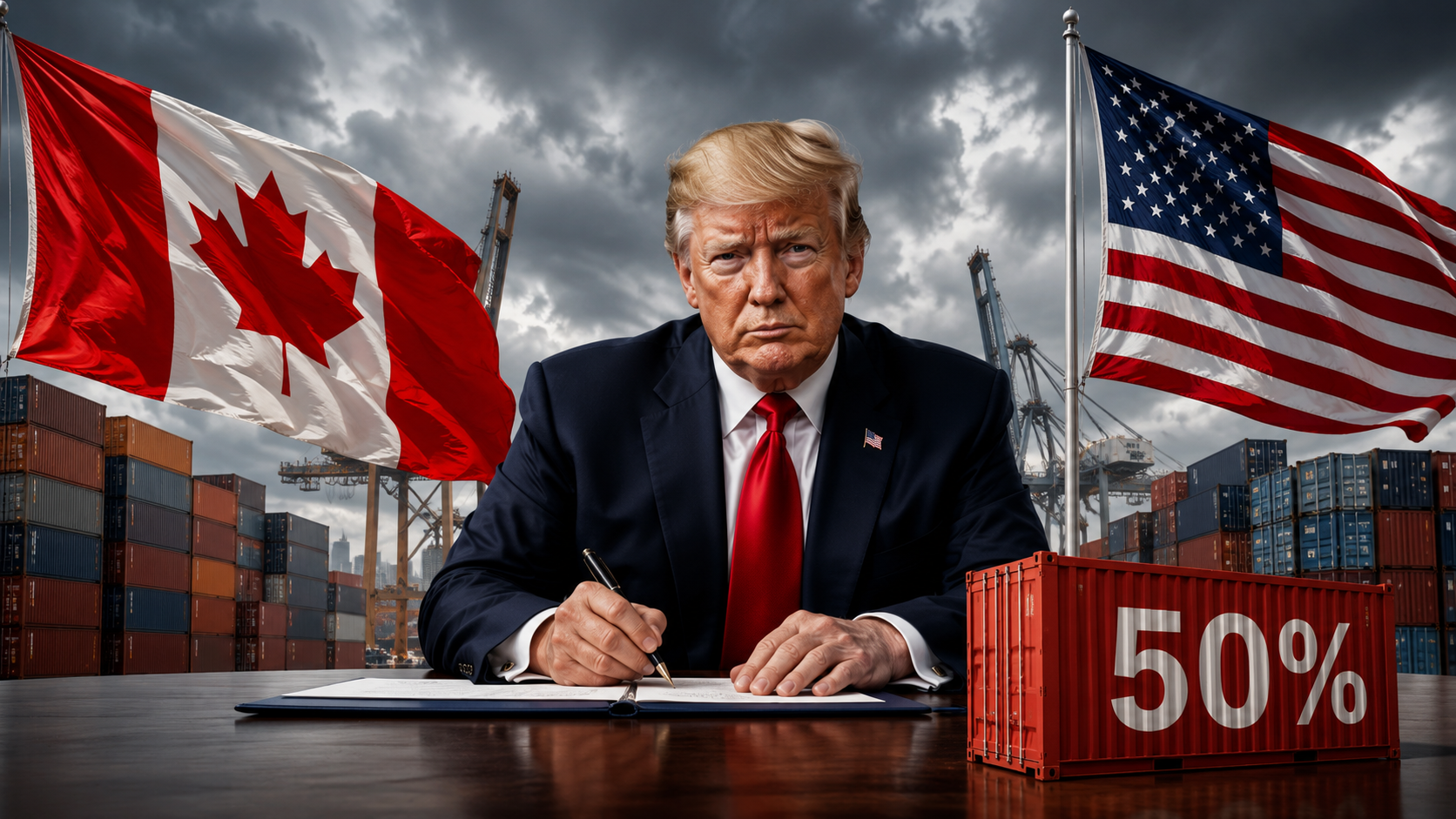
Canada Faces Pressure to Respond as Trump Announces New 50% Tariffs
Canada is facing renewed trade tensions with the United States after President Donald Trump announced a new round of 50% tariffs on a range of Canadian products. The move comes as both countries continue negotiations over the future of the United States-Mexico-Canada Agreement (USMCA), placing growing pressure on Prime Minister Mark Carney to defend Canadian industries while pursuing a long-term trade deal.
Trump Announces New 50% Tariffs on Canadian Goods
The United States has imposed a 50% tariff on several Canadian products, including hockey sticks, candles, and synthetic wigs, marking a significant escalation in the ongoing trade dispute.
U.S. officials said the new measures are intended to address what Washington considers unfair Canadian trade practices involving automobiles, dairy products, and alcoholic beverages.
The tariffs are scheduled to take effect on August 19.

Trade Dispute Intensifies During USMCA Negotiations
The latest tariffs come as Canada, the United States, and Mexico continue discussions over the future of the United States-Mexico-Canada Agreement (USMCA).
Although negotiations had recently resumed, the new trade action has added uncertainty to efforts aimed at reaching a broader agreement.

The USMCA supports nearly $2 trillion in annual trade across North America, making it one of the world's largest free trade agreements.
Canada Weighs Its Response
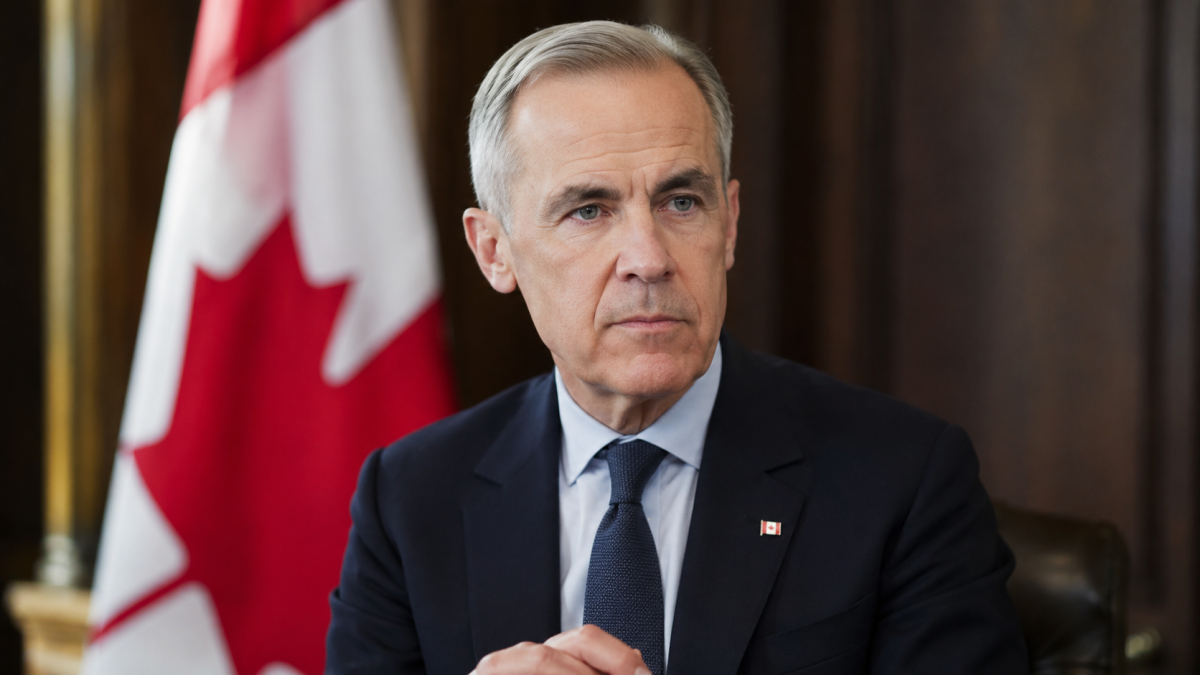
Prime Minister Mark Carney said his government is considering all available options if the new tariffs are implemented.
Following discussions with President Trump, Carney confirmed that both leaders agreed to intensify trade negotiations while emphasizing that Canada remains focused on securing a comprehensive and balanced agreement.
He has repeatedly stated that Canada would prefer no agreement rather than accepting an unfavorable deal.
Provincial Leaders Call for Stronger Action
Several Canadian provincial leaders have urged Ottawa to respond firmly to the latest U.S. trade measures.
Ontario Premier Doug Ford called for a tougher approach, arguing that Canada should defend its economic interests rather than continue making concessions during negotiations.
Business organizations also acknowledged that trade talks were expected to become increasingly difficult before a final agreement could be reached.
Existing Tariffs Continue to Impact Key Industries
The new measures add to existing tariffs already affecting trade between the two countries.
The United States continues to impose tariffs on Canadian steel, aluminum, copper, softwood lumber, and certain automotive products, while Canada maintains counter-tariffs on selected American imports, including steel, aluminum, and vehicles.
Several Canadian provinces have also limited the sale of U.S. alcoholic beverages in response to previous trade actions.
Analysts View Tariffs as Negotiating Pressure
Trade experts believe the latest announcement is designed to strengthen the U.S. negotiating position rather than signal an end to trade discussions.
Analysts say the additional tariffs increase pressure on Canada ahead of key USMCA negotiations while encouraging concessions on unresolved trade issues.
Despite the tougher rhetoric, both governments continue to express interest in reaching a long-term agreement.
Canadians Remain Skeptical of U.S. Trade Policy
Public opinion surveys suggest many Canadians remain frustrated by the ongoing trade dispute and skeptical of future U.S. trade actions.
Political analysts note that there is broad public support for protecting Canada's economic interests, with many voters favoring a firm negotiating stance despite the economic uncertainty created by tariffs.
What Comes Next?
With the new tariffs expected to take effect in August, trade negotiations between Canada and the United States are expected to intensify in the coming weeks.
Canadian officials continue consulting provincial governments and industry leaders as they prepare possible responses while seeking to preserve long-term trade stability with their largest trading partner.
FAQ
Why did the United States impose new tariffs on Canada?
The U.S. said the tariffs respond to what it considers unfair Canadian trade policies affecting sectors such as automobiles, dairy products, and alcohol.
When will the new tariffs take effect?
The latest 50% tariffs are scheduled to take effect on August 19.
How is Canada responding?
Prime Minister Mark Carney said Canada is evaluating all available options while continuing negotiations aimed at securing a comprehensive trade agreement with the United States.
What is the USMCA?
The United States-Mexico-Canada Agreement (USMCA) is the free trade agreement governing economic relations among the three North American countries.
Which industries are affected by the trade dispute?
The dispute impacts multiple sectors, including steel, aluminum, copper, lumber, automotive manufacturing, agriculture, and consumer goods, with additional products now facing new tariffs.