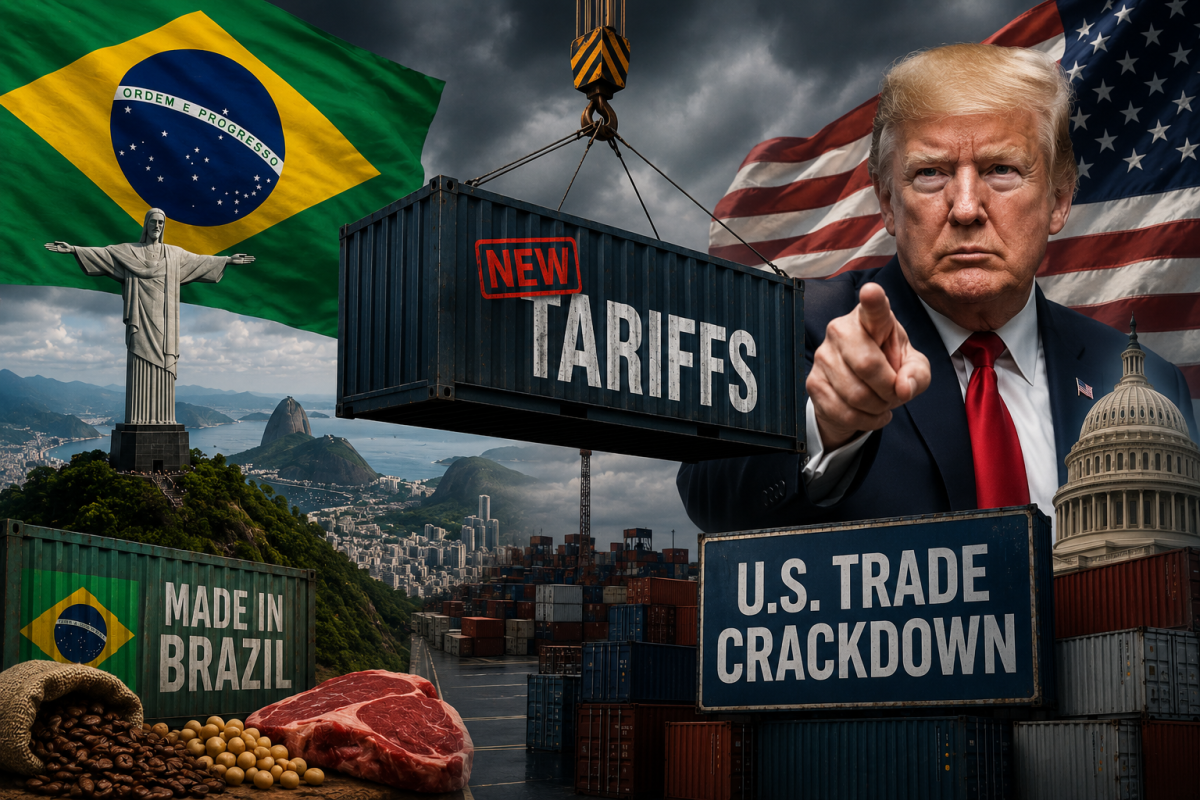
Brazil Braces for New U.S. Tariffs as Trump Administration Expands Global Trade Crackdown
Brazil is preparing for a fresh wave of U.S. tariffs that could affect thousands of exports worth billions of dollars annually. According to sources familiar with the negotiations, the Trump administration is expected to impose a new 25% tariff on a wide range of Brazilian goods, making Brazil the first country targeted under Washington's revamped trade enforcement strategy.
U.S. Expected to Announce 25% Tariffs on Brazilian Imports
The Trump administration is expected to unveil the new tariffs on Wednesday, applying a 25% duty to more than 4,000 Brazilian products exported to the United States.
According to Brazil's National Confederation of Industry (CNI), the measures could impact nearly $15 billion in annual trade, covering products such as sugar, pig iron, ethanol, tobacco and wood moldings.
Brazilian officials said months of negotiations failed to produce an agreement despite numerous meetings with U.S. representatives.
"There were dozens of meetings... but they want the impossible," one Brazilian official told Reuters.
Trade Talks Broke Down Over U.S. Demands
Sources said Washington sought preferential treatment for certain American exports, including exclusive tariff reductions that Brazilian law does not permit the government to grant unilaterally.

Brazilian officials argued they could not legally provide special trade benefits to a single country without broader legislative approval.
The failed negotiations have paved the way for the new tariff package.
Brazil Becomes First Target Under New U.S. Trade Strategy
The proposed duties would be imposed under Section 301 of the U.S. Trade Act, a mechanism allowing Washington to investigate and penalize countries accused of unfair trade practices.
Following the U.S. Supreme Court's decision earlier this year that limited the administration's broader global tariff policy, Section 301 has become the administration's preferred tool for pursuing country-specific trade actions.
Brazil is expected to become the first major test case, although nearly 80 trade investigations involving other countries are already underway.
U.S. Cites Trade Practices, Pix and Deforestation
The Section 301 investigation launched against Brazil last year cited several concerns, including:
- Brazil's Pix instant payment system, which Washington argues disadvantages credit card companies.
- Alleged links to illegal deforestation.
- Other trade practices viewed as unfair by U.S. authorities.
Brazil strongly rejected the allegations.
Foreign Minister Mauro Vieira called the investigation "arbitrary" and accused Washington of applying broad economic pressure without substantiating its claims.
Some Key Brazilian Exports Expected to Remain Exempt
Despite the broad tariff package, several strategically important exports are expected to avoid the new duties.
Likely exemptions include:
- Beef
- Coffee
- Aircraft parts
- Rare earth materials
These products were also excluded from earlier tariffs imposed during trade tensions linked to the legal case involving former President Jair Bolsonaro.
Additional Tariffs Could Raise Total Duty to 37.5%
Brazil also faces another ongoing Section 301 investigation concerning alleged forced labor risks in global supply chains.
That review is expected to conclude on July 24.
If additional penalties are imposed, Brazilian exports could face a combined tariff burden of 37.5%, significantly increasing costs for exporters.
Brazil May Retaliate if Tariffs Take Effect
Brazilian officials indicated the government is considering retaliatory trade measures once the U.S. tariffs are formally implemented.
The response will depend on the overall economic impact and whether key export industries suffer substantial losses.
Officials also warned the measures could accelerate Brazil's shift toward Asian markets.
"They are shooting themselves in the foot," one Brazilian official said, arguing that the tariffs are encouraging stronger commercial ties between Brazil and China.
Trade Relationship Already Showing Signs of Weakness
According to data from the American-Brazilian Chamber of Commerce, the United States' share of Brazil's total trade has already declined.
During the first half of the year, the U.S. accounted for 9.7% of Brazil's trade, down from 12.1% during the same period a year earlier—the lowest level recorded since 1997.
Industry groups in both countries have warned that the proposed tariffs could disrupt supply chains, increase costs for manufacturers, and further weaken one of the Western Hemisphere's largest trading relationships.