Many US Jewish Adults Report Harassment and Feel Less Safe Since Oct. 7, AP-NORC Poll Finds
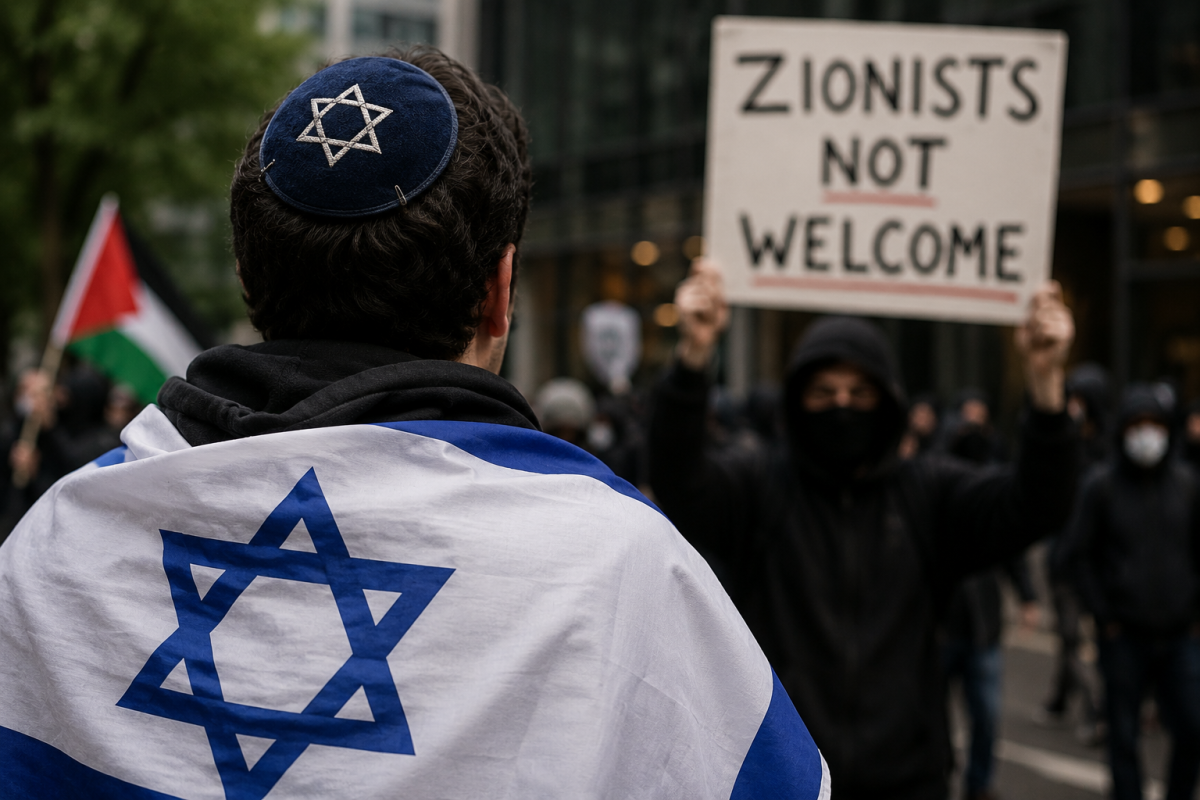
A majority of Jewish adults in the United States say they feel less safe than they did before Hamas's Oct. 7, 2023, attack on Israel, according to a new AP-NORC survey. The poll also found that many Jewish Americans have experienced harassment, threats or other antisemitic incidents over the past year, reflecting growing concerns about personal safety amid heightened tensions over the Israel-Gaza war.
The findings highlight how the conflict in the Middle East has reshaped the experiences of many Jewish Americans, with increased reports of antisemitism occurring alongside nationwide debates over U.S. policy toward Israel and the war in Gaza.

What did the AP-NORC poll find?
The survey found that about 6 in 10 Jewish adults say they feel less safe in the United States than they did before the Oct. 7, 2023, Hamas attack on Israel.
Only about one-third said they feel about as safe as before, while very few reported feeling safer.
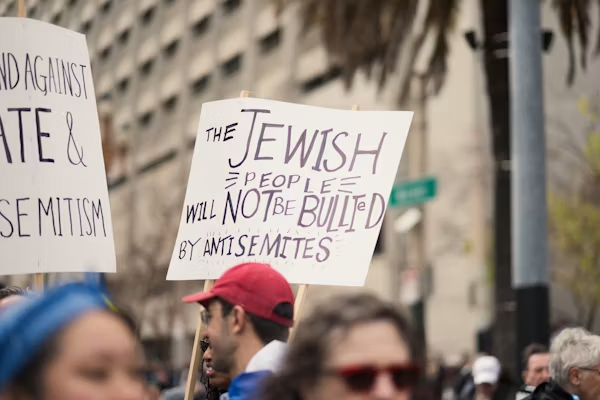
The poll also found that around one-third of Jewish adults currently feel either "very" or "somewhat" safe as Jewish people in the United States, while a similar proportion said they feel unsafe. Others said they felt neither safe nor unsafe.
Jewish adults who identify strongly with Israel or practice Judaism as a religion were more likely to report feeling threatened.

How many Jewish Americans experienced harassment?
According to the survey, about 3 in 10 Jewish adults said they or someone in their household experienced at least one antisemitic incident during the past year because of their Jewish background.
Those incidents included:
-
Physical assault.
-
Verbal abuse or threats.
-
Online harassment or cyberbullying.
-
Property damage or vandalism.
Approximately 1 in 10 respondents reported physical assault or property damage, while about 2 in 10 said they had experienced verbal abuse or online harassment.
Jewish adults who attend religious services regularly reported higher rates of harassment than the broader Jewish population.
Why do many Jewish adults say they feel less safe?
Many respondents linked their concerns to the rise in antisemitic incidents following the Israel-Hamas war and increasing public polarisation surrounding the conflict.
Hal Guberman, a 30-year-old from New Jersey, recalled being targeted because he was visibly Jewish.
He said:
"That person doesn't know anything about me. They don't know my politics. They don't know my beliefs. They don't know my viewpoints."
He added:
"But they saw me being visibly Jewish, and they made an opinion about me."
Some respondents also said they have become more cautious about displaying visible symbols of their Jewish identity.
The poll found that about 4 in 10 Jewish adults are now less likely to wear or display items that identify them as Jewish, such as a Star of David necklace or a kippah.
How are Jewish Americans responding?
Some Jewish Americans said they have long experienced antisemitism, while others said the current environment has made them reconsider how openly they express their identity.
Erin Baskin, of Pennsylvania, said:
"I've always grown up with antisemitism."
She added:
"Unfortunately, that's been my experience. It's nothing new."
Caitlin Rosendorn, from Illinois, said she stopped regularly wearing her Star of David necklace because she worried people might incorrectly assume her political views.
She said:
"I don't want people to get the wrong idea about my views."
Jon Kessler, a California resident, pointed to heightened security measures at Jewish institutions.
He said:
"Most people, when they go to church, don't have armed security, but every synagogue has an armed security guard."
Are Jewish Americans united on what constitutes antisemitism?
The survey found broad agreement that certain actions are clearly antisemitic.
Most Jewish adults said the following constitute antisemitism:
-
Vandalising synagogues or Jewish-owned businesses.
-
Denying or minimising the Holocaust.
-
Holding American Jews responsible for the actions of Israel.
-
Claiming American Jews are more loyal to Israel than the United States.
-
Saying Israel should not exist as a Jewish state.
However, opinions were more divided regarding criticism of Israel and anti-Israel demonstrations.
About half of Jewish adults said protests against Israel are not inherently antisemitic, while roughly 4 in 10 viewed such protests as antisemitic.
Similarly, about two-thirds said criticising Israel's military actions does not automatically constitute antisemitism, though those with stronger emotional ties to Israel were more likely to disagree.
How was the poll conducted?
The AP-NORC survey was conducted June 11–17 using NORC's nationally representative AmeriSpeak Panel.
Researchers surveyed 3,040 U.S. adults, including 1,022 Jewish adults.
The overall margin of sampling error is plus or minus 2.8 percentage points.
Questions About the AP-NORC Poll
What percentage of Jewish Americans feel less safe?
About 6 in 10 Jewish adults said they feel less safe than they did before Hamas's Oct. 7, 2023, attack on Israel.
How many reported antisemitic incidents?
Approximately 3 in 10 Jewish adults said they or someone in their household experienced harassment, assault, property damage or online abuse because of their Jewish background during the past year.
Are Jewish Americans changing how they express their identity?
Yes. About 4 in 10 respondents said they are now less likely to wear or display items that visibly identify them as Jewish.
Do Jewish Americans agree on what counts as antisemitism?
There is broad agreement that attacks on Jewish people or institutions are antisemitic. Still, respondents were more divided over whether criticism of Israel or anti-Israel protests should be considered antisemitic.
The survey underscores the growing sense of insecurity reported by many Jewish Americans following the Israel-Hamas war while also highlighting differing views within the community about the relationship between criticism of Israel and antisemitism. As debates over the conflict continue in the United States, the findings suggest that concerns about safety and discrimination remain significant for many Jewish households.