There Are So Many Bones Everywhere: How Whale Graveyards Reveal a Hidden Deep-Sea Crisis
An extraordinary underwater expedition beneath the pack ice of eastern Greenland has uncovered a haunting scene—dozens of whale skeletons resting in shallow coastal waters instead of the deep ocean where they would naturally nourish entire ecosystems. The discovery highlights how human activity has altered one of nature's most important cycles, depriving the deep sea of nutrients that sustain hundreds of marine species.
Under Arctic Ice, Divers Discovered an Unusual Whale Graveyard
Underwater photographer Alex Dawson traveled to eastern Greenland to document an extraordinary site hidden beneath nearly one meter (3 feet) of Arctic sea ice. After reaching the remote location by snowmobile and on foot, Dawson and his team manually cut a small triangular opening through the ice before descending into near-freezing water.
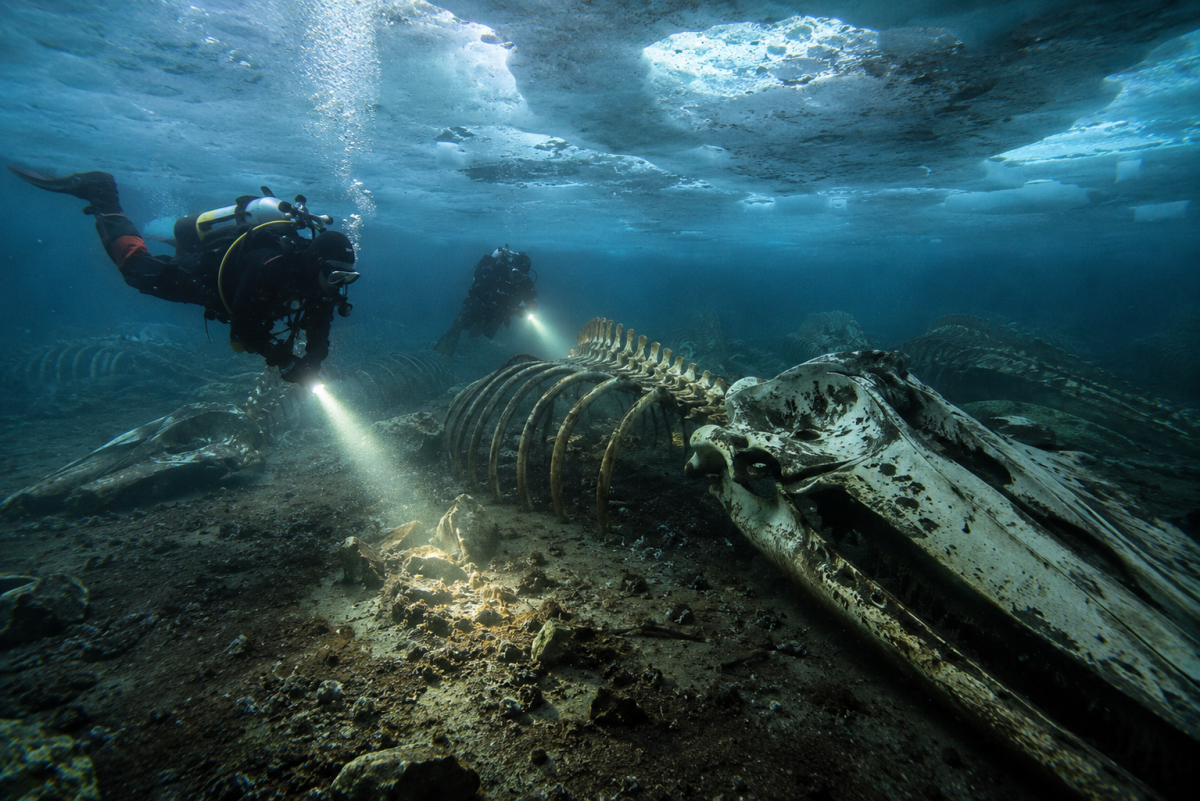
Only a few meters below the surface, Dawson encountered the remains of roughly 20 butchered minke whales scattered across the shallow seabed. Rather than sinking into the deep ocean after death, the skeletons remained trapped in coastal waters, creating what he described as an unforgettable underwater graveyard.
Dangerous Dive Revealed a Rare Sight
The dive itself carried significant risks.
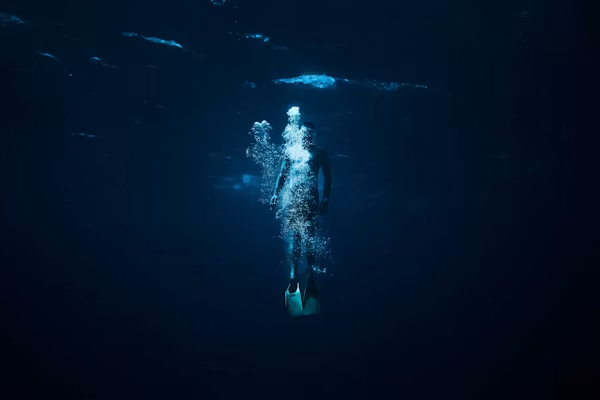
With water temperatures around -2°C (28°F) and air temperatures near -20°C (-4°F), divers relied on thick drysuits while freediver Anna Von Boetticher entered the water wearing only a 5-millimeter wetsuit, limiting each dive to less than a minute.
As tides shifted beneath the floating pack ice, loud cracks echoed through the water, raising concerns that the team's only exit hole could close before the divers resurfaced. Despite the hazards, Dawson completed the photographs that later earned international recognition.
Whale Falls Are Essential to Deep-Sea Life
Marine scientists say whales continue shaping ocean ecosystems long after they die.
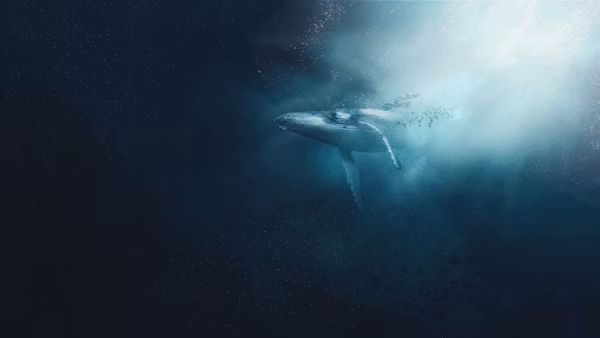
Under natural conditions, whale carcasses sink thousands of meters to the seafloor, where they become "whale falls"—massive sources of food that support deep-sea life for decades.
The process unfolds in several stages:
- Sharks, hagfish and other scavengers consume soft tissue.
- Crabs and crustaceans strip away remaining flesh.
- Bone-eating worms known as Osedax colonize the skeleton.
- Chemosynthetic bacteria thrive as oils and sulfur seep into surrounding sediments.
This succession creates unique habitats capable of sustaining more than 400 marine species, making whale falls among the richest ecosystems on the deep ocean floor.
Shallow Whale Remains Interrupt a Natural Ecological Cycle
The Greenland whale skeletons tell a different story.
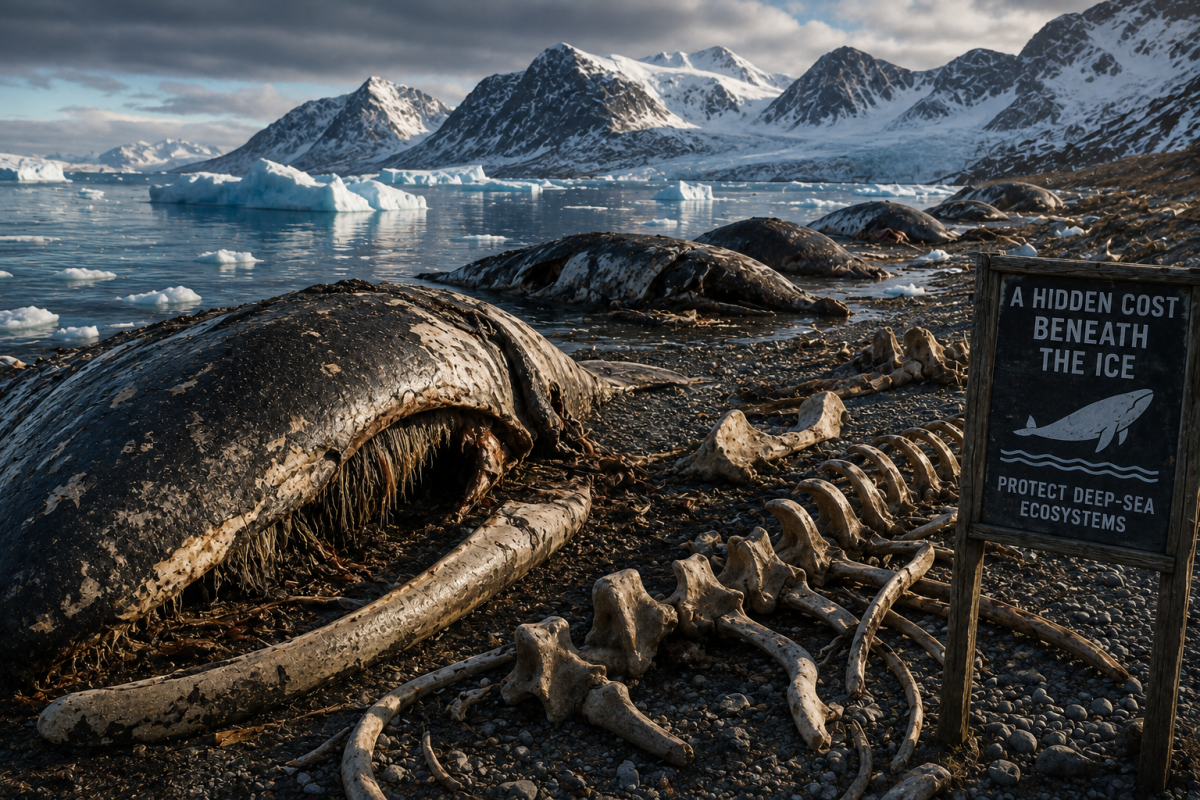
Because the whales were harvested for subsistence by local communities, usable meat, blubber and skin were removed on shore before the remaining bones drifted into nearby shallow waters.
Although the practice is permitted under international regulations for Indigenous subsistence hunting, scientists note that the remains never reach the deep ocean, preventing the nutrient transfer that naturally supports deep-sea biodiversity.
Without these whale falls, entire biological communities may never develop.
Industrial Whaling Left a Lasting Ecological Legacy
Researchers say the problem extends far beyond Greenland.
During the 20th century, industrial whaling killed an estimated three million whales, dramatically reducing whale populations worldwide.
With far fewer whales dying naturally in the open ocean, scientists believe the number of whale falls has also declined sharply. That reduction may have permanently altered deep-sea ecosystems and could have contributed to the disappearance of species before they were ever discovered.
Experts say many unanswered questions remain about how decades of declining whale populations have affected biodiversity in the deepest parts of the ocean.
Greenland's Subsistence Hunts Continue Under International Rules
The whale remains photographed near Tasiilaq, a town in eastern Greenland, originated from legally permitted Indigenous subsistence hunts.
The International Whaling Commission (IWC) allows Greenland's Indigenous communities to harvest a limited number of whales each year because marine resources remain essential for food security in regions where agriculture is extremely limited.
In eastern Greenland, an average of nine minke whales are harvested annually under these regulations.
Scientists Continue Studying the Impact on Deep-Sea Biodiversity
Researchers say whale falls remain one of the ocean's most important natural recycling systems, transferring enormous quantities of nutrients from the surface to the deepest marine environments.
While thriving whale-fall ecosystems still exist today, scientists believe the dramatic reduction in whale numbers over the past century may have fundamentally reshaped deep-sea biodiversity in ways that are only beginning to be understood.
The whale graveyards beneath Greenland's ice serve as a powerful reminder that the life cycle of the world's largest mammals continues long after death—and that disruptions to that cycle can echo across entire ocean ecosystems.