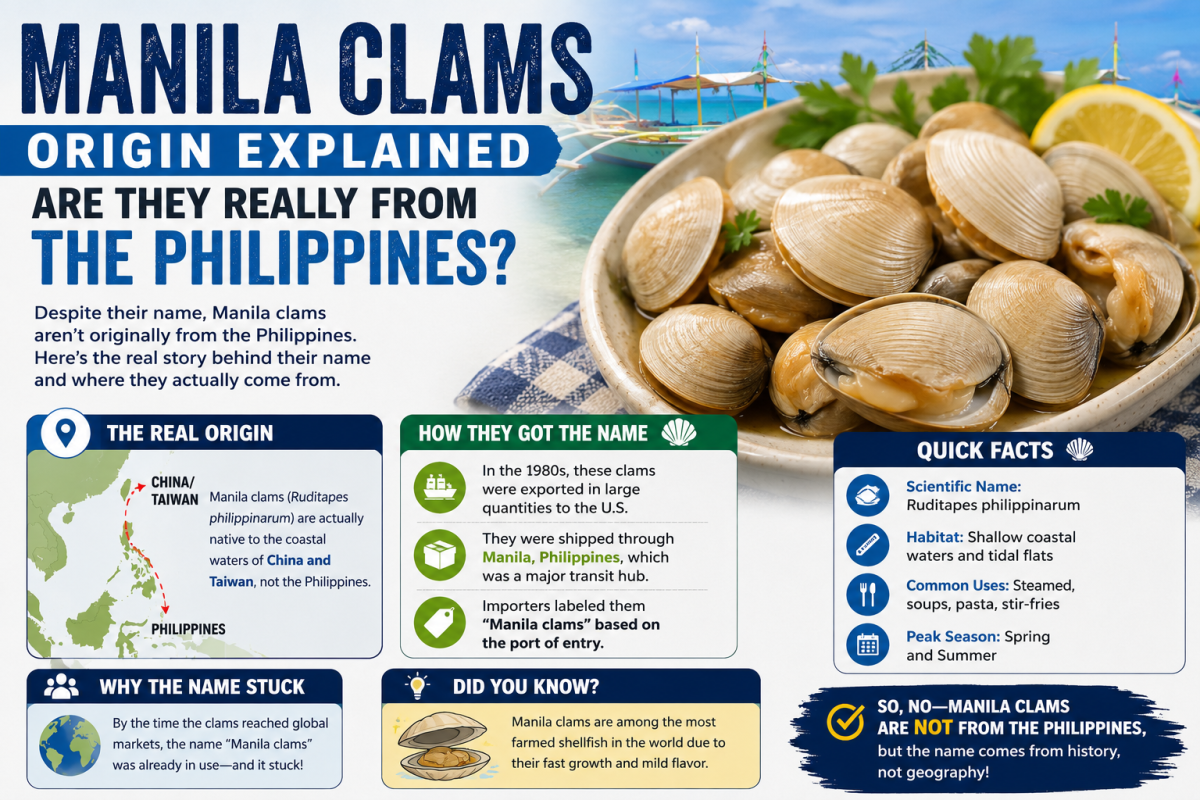
Manila Clams Aren't From the Philippines. Here's Where They Really Came From
Manila clams have become the latest invasive marine species to establish populations along the northwestern Atlantic coast, prompting scientists to investigate how they arrived and what their spread could mean for New England's coastal ecosystems. The discovery has also renewed interest in a common misconception: despite their name, Manila clams are not native to the Philippines.
Researchers say the shellfish, Ruditapes philippinarum, naturally occurs along the Pacific coast of East Asia and has expanded worldwide through human activity over the past century.
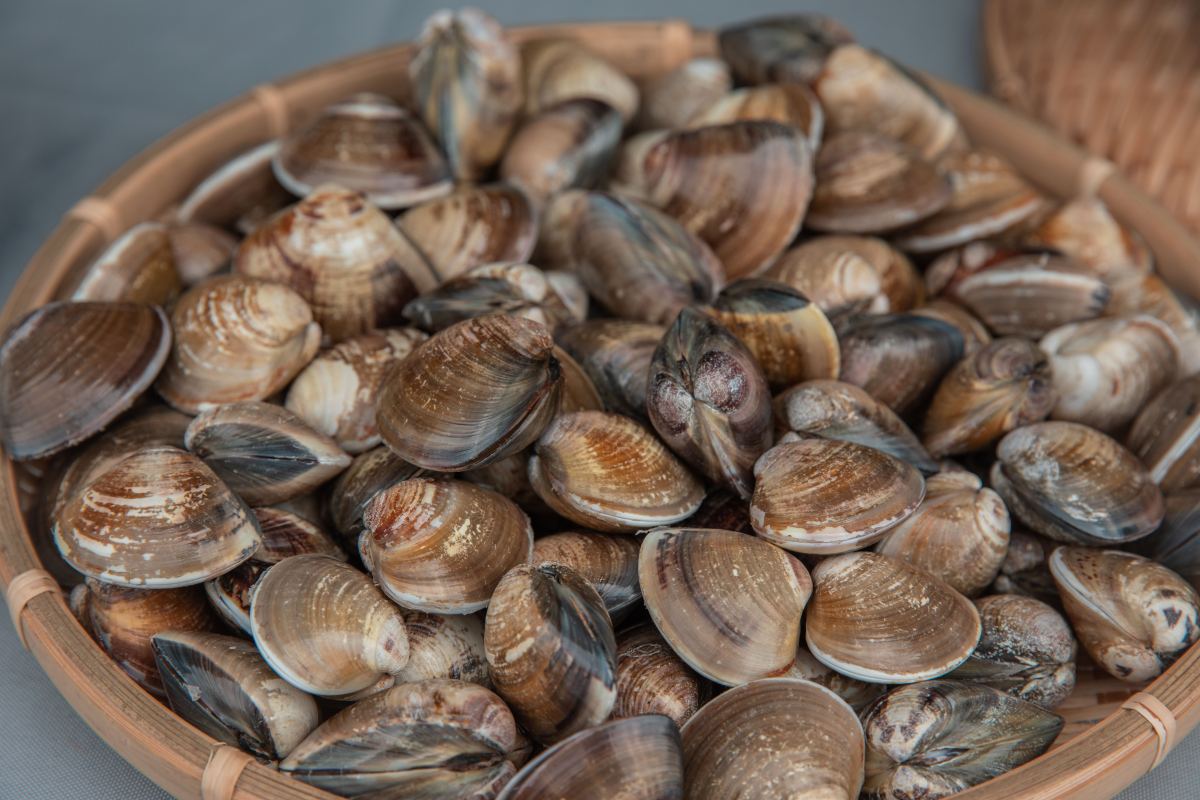
Manila Clams Are Native to East Asia
Despite the name, Manila clams did not originate in the Philippines.
Scientists say the species' natural habitat stretches from Russia's Sakhalin Islands through Japan to southern China, making East Asia its native range.

The common name has long caused confusion, but researchers note that the shellfish spread internationally through aquaculture and commercial seafood trade rather than originating in the Philippines.
Scientists Confirm Atlantic Coast Population
A new study published in the journal Biological Invasions confirmed that Manila clams have established populations around Cape Cod and the Boston area.
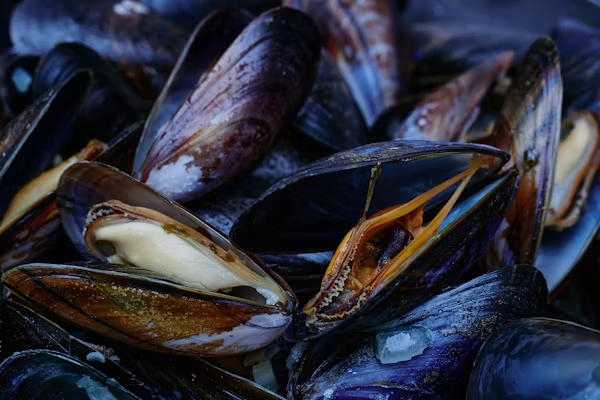
The research was conducted by scientists from the University of Massachusetts Amherst, MIT Sea Grant, and the Center for Coastal Studies.
The discovery marks the first confirmed establishment of the species along the northwestern Atlantic coast, which had previously remained free of self-sustaining Manila clam populations.

How the Clams Arrived Remains a Mystery
Researchers have not determined how the shellfish reached New England.
While Manila clams have spread across much of the Northern Hemisphere over the past century, scientists say the northwestern Atlantic was the last major region without an established population.

Marine biologists are now investigating whether the clams arrived through shipping, aquaculture activities, or another pathway.
Scientists Are Monitoring Potential Ecological Risks
The arrival of Manila clams raises concerns because invasive shellfish can compete with native species for food, habitat, and other resources.
Researchers say the species also has the potential to hybridize with closely related clams, which could affect local marine biodiversity over time.
At this stage, scientists say it remains too early to determine whether the shellfish will become a significant ecological threat or remain a relatively minor addition to the region's coastal waters.
There Could Be Some Environmental Benefits
Researchers caution that the species' arrival may not produce only negative effects.
Because Manila clams serve as prey for a variety of marine predators, they could provide an additional food source that helps reduce pressure on native shellfish species.
Scientists are continuing to study how the clams interact with local ecosystems and whether they influence predators such as green crabs, which currently feed heavily on native softshell clams.
A Valuable Seafood Species Under Close Watch
Manila clams are among the world's most commercially important shellfish, supporting an estimated $7 billion global seafood industry.
Their economic value contrasts with the ecological questions now facing researchers in New England, where ongoing monitoring will determine whether the species remains localized or continues expanding along the Atlantic coastline.
For now, scientists say the discovery offers a rare opportunity to observe an invasive marine species during the earliest stages of establishment, providing valuable insight into how its long-term impact may unfold.