Asian Tech Companies Eye Global Investors After SK Hynix's Blockbuster U.S. Debut, but Demand May Be More Selective
SK Hynix's record-breaking U.S. share sale has sparked interest among Asian technology companies considering overseas listings, but market analysts say replicating that success may prove difficult as investors become more selective about artificial intelligence-related opportunities.
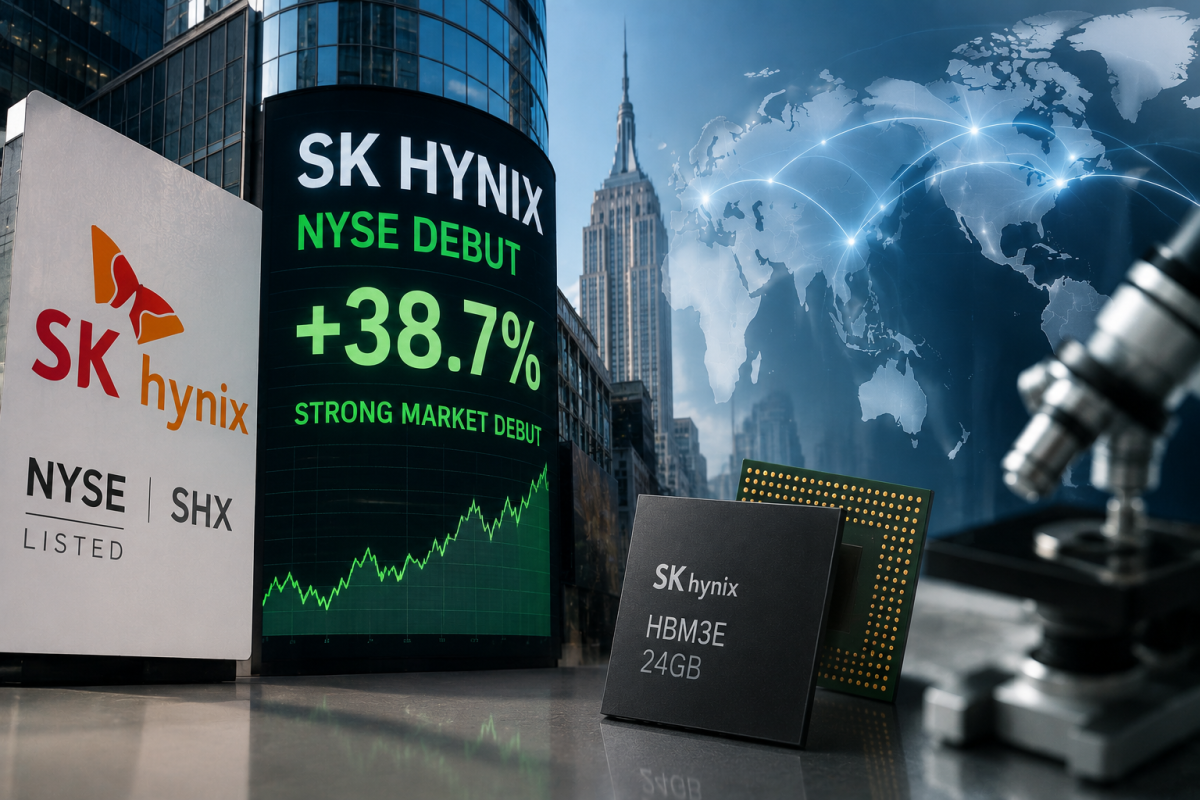
The South Korean memory chipmaker raised $26.5 billion through its U.S. listing last week, benefiting from its dominant position in the AI semiconductor supply chain and strong investor demand for companies tied to the rapid expansion of artificial intelligence.
SK Hynix Benefited From Strong AI Momentum
Market participants say SK Hynix occupies a unique position that few companies can easily replicate.
As one of the world's leading suppliers of high-bandwidth memory (HBM) chips used in Nvidia's AI processors, the company offered U.S. investors exposure to a critical segment of the AI ecosystem that is otherwise difficult to access.
Analysts say the combination of its market leadership, liquidity, and AI relevance helped fuel exceptional demand during its U.S. market debut.
Investors Expected to Be More Selective
While enthusiasm surrounding artificial intelligence continues to support technology stocks, investors are becoming increasingly cautious about valuations and long-term growth expectations.
Industry experts note that semiconductor companies have historically experienced sharp boom-and-bust cycles, making investors more disciplined when evaluating new offerings.
Rather than backing every AI-related listing, investors are expected to favour companies with clear competitive advantages, strong fundamentals, and differentiated technology.
Other Asian Tech Firms Explore Overseas Listings
Several Asian technology companies are already considering similar moves to attract international capital.
Japanese memory chipmaker Kioxia has previously said it plans to pursue an American Depositary Receipt (ADR) listing as early as the April-June quarter of 2027. The company's shares have surged this year as demand for AI-related memory products continues to grow.
Singapore-based data centre operator DayOne is also pursuing a dual listing in the United States and Singapore while reportedly targeting a valuation of around $20 billion.
Investment bankers expect additional technology companies across Asia to explore overseas fundraising opportunities as AI investment continues to reshape capital markets.
AI Drives Record Fundraising Across Asia
Artificial intelligence has fueled a historic wave of fundraising across the region.
According to LSEG data, Asian technology companies raised $84 billion through July 10, more than three times the amount raised during the same period in 2025.
American Depositary Receipts (ADRs) and Global Depositary Receipts (GDRs) accounted for $29 billion, marking a record high for those fundraising vehicles.
Many companies view U.S. capital markets as attractive because they offer broader institutional investor participation, deeper liquidity, and, in many cases, higher valuations than domestic exchanges.
Valuation Discipline Remains a Key Challenge
Despite healthy investor interest, recent deals suggest companies may need to temper pricing expectations.
Taiwan-based Unimicron Technology recently raised $1.4 billion through a global depositary share offering that attracted multiple times more demand than available shares. Even so, the deal was priced near the lower end of its marketing range and at a 5.3% discount to the company's closing share price.
Market participants say that while capital remains available for high-quality technology companies, investors are placing greater emphasis on reasonable valuations as market volatility increases.
AI Investment Cycle Still Has Room to Grow
Investment banks remain optimistic about the broader outlook for technology fundraising.
Many expect the structural demand created by artificial intelligence infrastructure, advanced semiconductors, cloud computing, and data centres to support new equity offerings over the next several years.
Even so, analysts believe SK Hynix's blockbuster debut represents an exceptional case rather than a blueprint that every Asian technology company can expect to follow.