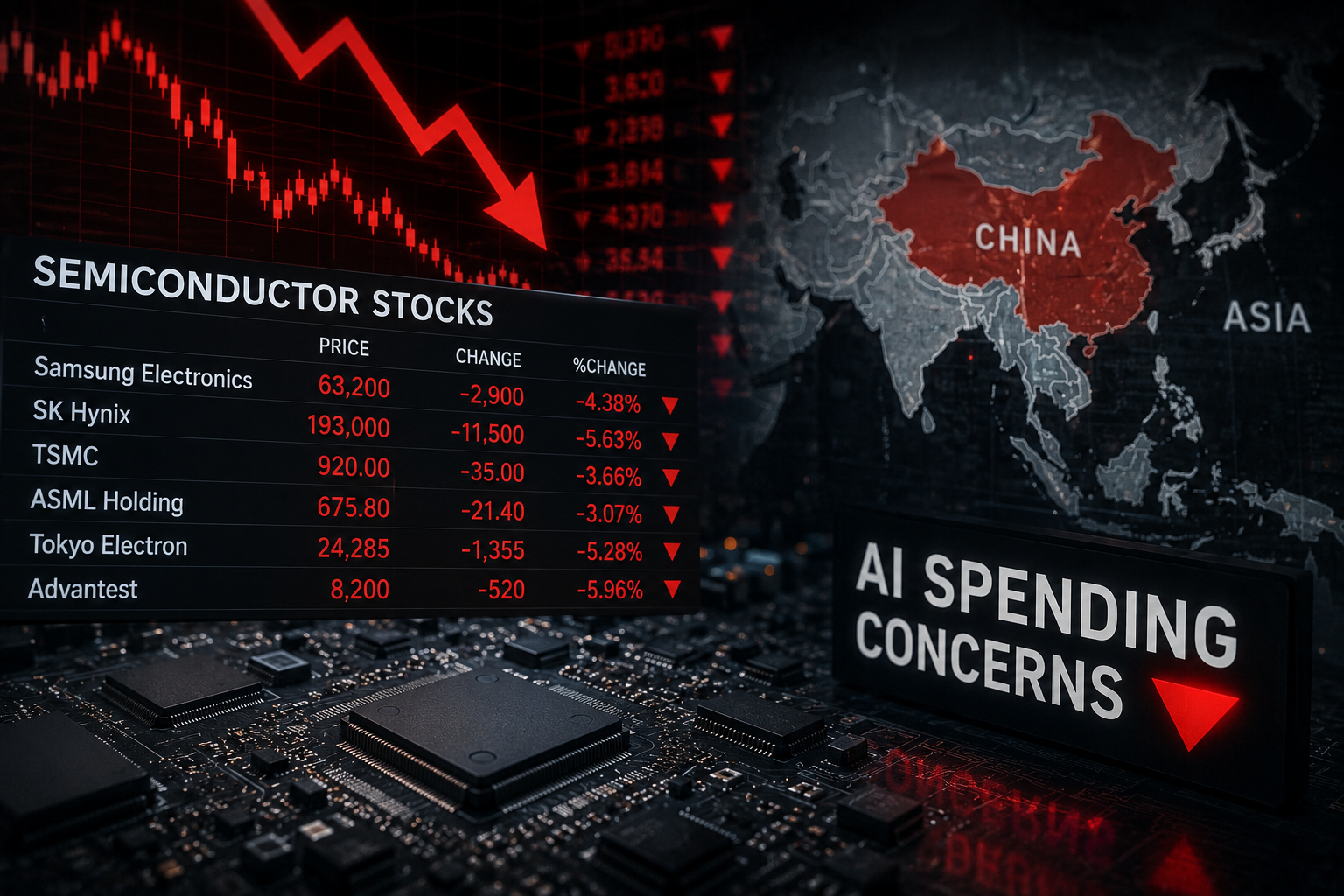
Asian Chip Stocks Sink as China Competition and AI Spending Concerns Shake Semiconductor Sector
Asian semiconductor stocks fell sharply on Tuesday, with South Korean chipmakers leading the decline as investors reassessed the outlook for the artificial intelligence (AI) boom. Growing concerns over China's rapid advances in semiconductor technology, questions about AI infrastructure spending, and fears of increasing competition triggered a broad selloff across the region's technology sector.
The losses came after several developments raised doubts about whether the AI-driven rally in chip stocks can maintain its momentum.

South Korean Chipmakers Lead Regional Decline
South Korea's semiconductor giants suffered some of the biggest losses during Tuesday's trading session.
-
SK Hynix fell by as much as 14%.
-
Samsung Electronics dropped up to 13.4%.
The sharp declines weighed heavily on South Korea's benchmark KOSPI Index, as the two companies represent a significant portion of the country's stock market.
Meanwhile, other Asian chipmakers also posted steep losses:
-
Kioxia Holdings (Japan) fell nearly 18%.
-
MediaTek (Taiwan) declined more than 9%.
The broad-based selloff reflected weakening investor confidence across the semiconductor industry.
AI Investment Concerns Weigh on Market Sentiment
Analysts said investors are becoming increasingly cautious about the enormous investments required to support the AI industry.
Recent reports questioning how future AI infrastructure projects will be financed have prompted investors to reassess valuations of companies that have benefited from the AI boom.
One factor influencing sentiment was a report suggesting Nvidia could provide significant financial backing for a major OpenAI data center project, raising concerns that the AI chip leader may be helping finance its own customers' infrastructure expansion.
China's Chip Industry Adds Competitive Pressure
Investor concerns were also fueled by China's continued progress in semiconductor manufacturing.
Reports that Chinese companies are developing domestic deep ultraviolet (DUV) lithography equipment have strengthened expectations that China's chip industry could become increasingly competitive.
If successful, domestic chipmaking technology could allow Chinese memory manufacturers to expand production capacity and compete more aggressively with established global suppliers.
Although commercialization timelines remain uncertain, the reports were enough to increase market caution.
CXMT's Strong Debut Raises Oversupply Fears
Chinese memory chipmaker CXMT attracted additional attention after its strong stock market debut.
Analysts believe the company's growing presence could intensify competition within the global memory chip market.
Investors are concerned that:
-
Additional production capacity could increase chip supply.
-
Greater competition may put pressure on memory chip prices.
-
Established manufacturers could face lower profit margins over time.
The successful listing reinforced expectations that China's semiconductor industry is becoming a stronger global competitor.
Lower-Cost AI Models Create New Questions
The popularity of lower-cost Chinese open-source AI models has also contributed to changing investor expectations.
Some market participants are questioning whether future AI systems will require the same level of computing power that previously drove demand for advanced graphics processors and high-bandwidth memory (HBM) chips.
If AI developers can achieve strong performance using more efficient models, future demand for expensive AI hardware could grow more slowly than previously anticipated.
Investors Await Key Earnings Reports
Market participants are also preparing for another round of earnings reports from major semiconductor companies later this week.
Recent results from technology companies have generally exceeded expectations, but semiconductor stocks have still declined afterward as investors remain focused on long-term growth prospects rather than short-term financial performance.
Analysts expect upcoming earnings guidance to provide clearer insight into future AI-related demand.
What's Next
Investors will closely monitor earnings reports from leading semiconductor companies, updates on AI infrastructure investments, and developments in China's chip industry. Future guidance from major technology firms could determine whether confidence returns to the AI sector or whether concerns about competition and slowing demand continue to pressure semiconductor stocks.
FAQ
Why did Asian semiconductor stocks fall?
Investors reacted to concerns about AI infrastructure financing, rising competition from China's semiconductor industry, and uncertainty over future demand for AI chips.
Which companies saw the biggest declines?
SK Hynix and Samsung Electronics led the selloff, while Kioxia Holdings and MediaTek also recorded significant losses.
Why is China's semiconductor industry affecting the market?
Investors believe China's growing chip manufacturing capabilities could increase global competition and potentially lead to oversupply in the memory chip market.
What role did AI play in the selloff?
Questions about future AI infrastructure spending and the growing popularity of lower-cost AI models led investors to reconsider the long-term demand outlook for advanced AI hardware.
What are investors watching next?
Upcoming semiconductor earnings reports, AI investment plans, and further developments in China's chip industry will likely shape market sentiment in the weeks ahead.