Tesla Wins UK Supreme Court Fight Over 5G Patent Licensing Dispute
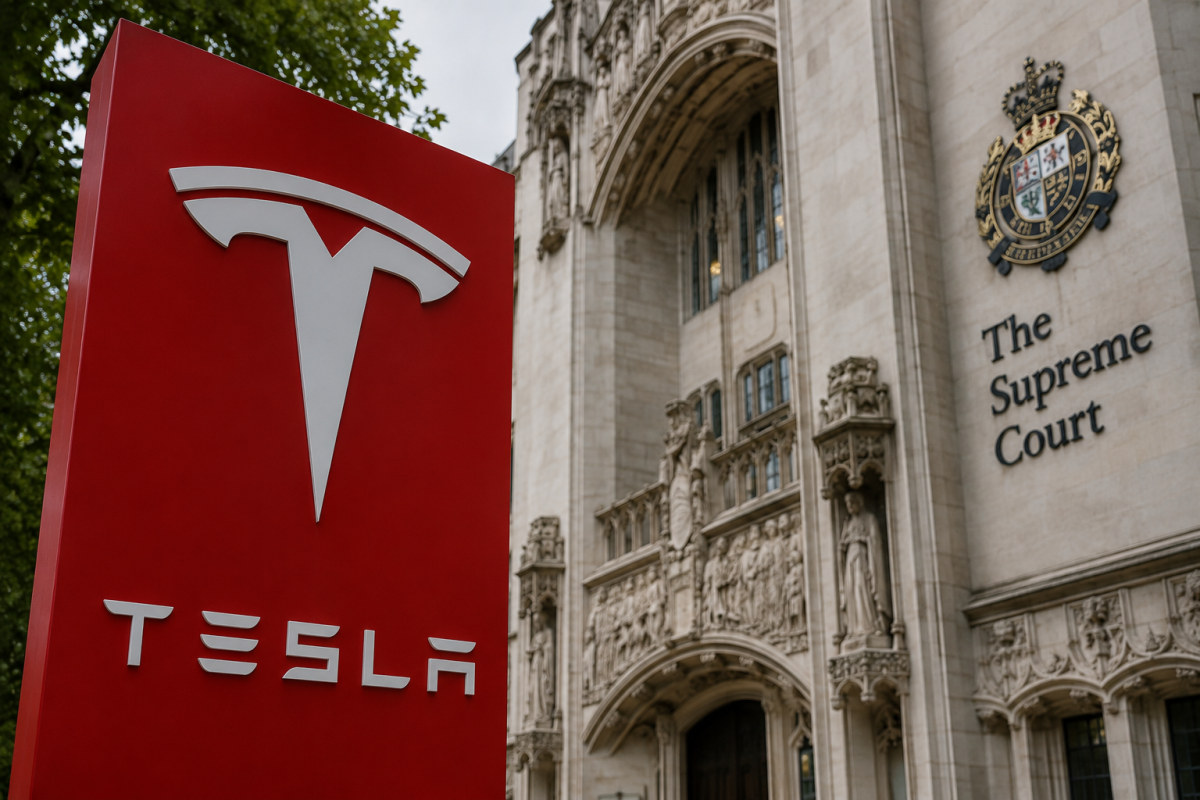
Tesla has secured a major legal victory in the United Kingdom after the Supreme Court ruled that the electric vehicle maker can revive its lawsuit over 5G patent licensing. The decision clears the way for Tesla to continue seeking court-determined licensing terms as it prepares to introduce 5G-enabled vehicles in the UK market.
The ruling overturns an earlier decision that had blocked Tesla's broader claim, sending the case back to the High Court for further proceedings.
Legal Dispute Centers on 5G Patent Licensing
The lawsuit involves Tesla, U.S. technology company InterDigital, and Avanci, a patent licensing platform that manages essential wireless technology patents for the automotive industry.
Tesla filed the case in London's High Court in 2023, arguing that it should be granted a license on Fair, Reasonable, and Non-Discriminatory (FRAND) terms before launching vehicles equipped with 5G connectivity in Britain.
The company asked the court to determine what those licensing terms should be for patents owned by InterDigital and licensed through Avanci.
Earlier Court Decision Favored Patent Holders
In 2024, the High Court ruled in favor of InterDigital and Avanci, dismissing Tesla's request for a judicial determination of FRAND licensing terms.
Although Tesla was allowed to continue challenging the validity of three InterDigital patents, its broader licensing claim was rejected.
Tesla later lost an appeal before the Court of Appeal before taking the dispute to the UK's Supreme Court.
Supreme Court Revives Tesla's Lawsuit
The UK's highest court ruled in Tesla's favor, concluding that companies holding standard-essential patents cannot avoid their obligations to offer licenses on FRAND terms simply by participating in a patent pool or licensing platform.
The decision allows Tesla's licensing lawsuit to move forward and returns the case to the High Court for further consideration.
The ruling could influence how future disputes involving standard-essential patents are handled in the UK.
Avanci Disagrees With the Decision
Following the judgment, Avanci said it respectfully disagreed with the Supreme Court's ruling and maintained that Tesla's legal claims lack merit.
Neither Tesla nor InterDigital immediately commented on the decision.
The litigation will now continue in the High Court, where the licensing dispute is expected to be examined in greater detail.
Why the Case Matters
The outcome could have broader implications for the automotive industry as manufacturers increasingly integrate advanced wireless technologies into connected vehicles.
Modern vehicles rely on technologies such as 5G for features including:
-
Connected vehicle services
-
Real-time navigation
-
Software updates
-
Vehicle-to-cloud communication
-
Future autonomous driving capabilities
How courts interpret FRAND licensing obligations may influence future negotiations between automakers and patent holders.
What's Next
The case will return to the High Court, where judges will consider Tesla's request for FRAND licensing terms for the disputed patents. The outcome could shape future patent licensing agreements involving connected vehicles and standard-essential technologies in the United Kingdom.
FAQ
Why did Tesla sue InterDigital and Avanci?
Tesla sought a court ruling to determine fair licensing terms for 5G-related patents needed for its connected vehicles in the UK.
What does FRAND mean?
FRAND stands for Fair, Reasonable, and Non-Discriminatory. It refers to licensing terms that patent holders are expected to offer for standard-essential technologies.
What did the UK Supreme Court decide?
The court ruled that Tesla's lawsuit can proceed, allowing the company to continue seeking a judicial determination of FRAND licensing terms.
What happens next in the case?
The dispute will return to the High Court, where Tesla's licensing claims will be heard in more detail.
Why is this case important?
The decision could influence future licensing negotiations involving 5G and other standard-essential patents used in connected vehicles across the automotive industry.