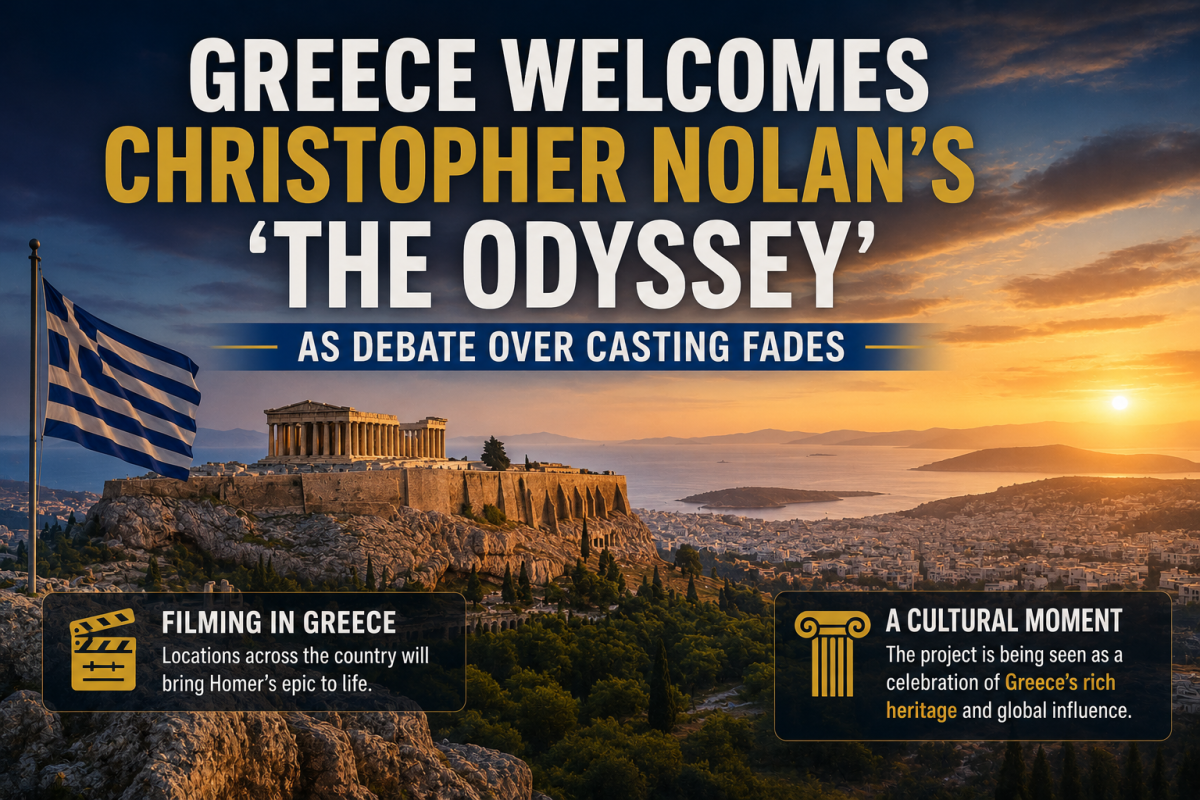
Greece Welcomes Christopher Nolan's 'The Odyssey' as Debate Over Casting Fades
Christopher Nolan's highly anticipated epic The Odyssey arrives in theaters Friday, generating excitement across Greece, where Homer's legendary tale has been part of everyday education and culture for generations. While the film has sparked casting debates abroad, many Greeks are focused less on controversy and more on how another generation will experience one of history's greatest stories.
Starring Matt Damon as Odysseus, the film follows the legendary king's perilous journey home after the Trojan War, battling mythical creatures, divine intervention, and mounting obstacles before reclaiming his kingdom. For audiences in Greece, however, the story itself is anything but new.
Homer's Epic Is Still Part of Everyday Greek Education
The Odyssey remains a cornerstone of Greece's school curriculum, with students studying the epic in seventh grade across the country.
Teachers encourage students to move beyond memorization by examining Odysseus' decisions, leadership, and moral conflicts. Classroom discussions often explore whether revenge is justified, what defines heroism, and how intelligence compares with physical strength.

Educator Filippos Mantzaris said the goal is not to preserve the story in a single form but to help students understand why it continues to evolve.
"Every new creation is exactly that — a new creation."
That approach has allowed Homer's nearly 3,000-year-old work to remain relevant for modern audiences.
Families Continue Passing the Story to New Generations
For many Greek families, The Odyssey extends well beyond the classroom.
Parents often introduce children to simplified versions of Homer's works before they encounter the original text in school. Theater productions and cultural performances have also become popular ways to bring the ancient adventure to younger audiences.
Actor Manos Pintzis, who has portrayed Odysseus on stage, believes live performances help children connect with Greek mythology in a more engaging way than textbooks alone.
Meanwhile, 12-year-old student Kyriakos Agapiou said studying the epic taught him an important life lesson: perseverance.
Casting Debate Has Drawn More Attention Abroad Than in Greece
While Nolan's casting decisions have fueled criticism from some conservative commentators in the United States, the controversy has generated relatively little concern in Greece.
Critics questioned the casting of Lupita Nyong'o as Helen of Troy, arguing it departed from traditional portrayals of ancient Greek characters. Nolan has dismissed criticism made before audiences have seen the finished film, saying conversations about casting often overlook the broader vision of the story.
The director has also emphasized that his goal was to create a version of the ancient world that feels accessible to contemporary audiences rather than replicate earlier Hollywood interpretations.
Greeks Are Accustomed to International Casts Playing Ancient Heroes
International actors portraying iconic Greek figures is hardly new.
Films such as 300, Troy, and Alexander featured stars including Gerard Butler, Brad Pitt, Colin Farrell, and Angelina Jolie in roles based on Greek history and mythology. Anthony Quinn's performance in Zorba the Greek also remains one of the country's most celebrated portrayals of a Greek character despite the actor not being Greek.
Nolan's adaptation continues that tradition with an ensemble cast that includes Matt Damon, Tom Holland, Anne Hathaway, Robert Pattinson, Zendaya, Charlize Theron, and Lupita Nyong'o.
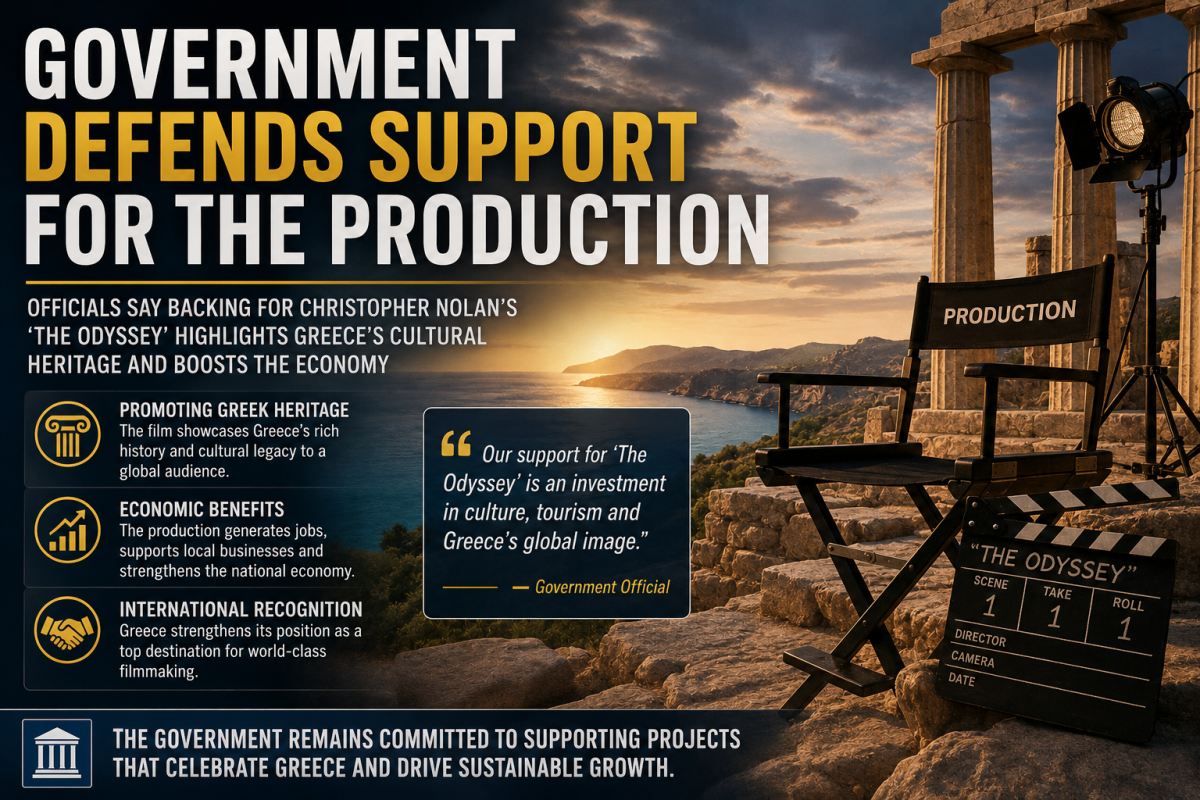
Government Defends Support for the Production
The film also became part of Greece's political conversation after the government approved roughly €6 million ($6.9 million) in production incentives to support filming in the country.
The nationalist political party Niki criticized both the funding and the casting, arguing public money should not support what it described as a reinterpretation of Greek cultural heritage.
Greek Culture Minister Lina Mendoni rejected those arguments, saying artistic interpretation belongs to filmmakers rather than governments and that public officials should not determine how myths are portrayed on screen.
Why 'The Odyssey' Still Resonates Nearly 3,000 Years Later
Ancient Greek literature scholar Christos Tsagalis said Homer's works have endured because every generation has found new ways to reinterpret them while preserving their central themes.
According to Tsagalis, the story's universal appeal—not strict adherence to a single version—has allowed The Odyssey to remain one of the world's most influential literary works.
As Nolan's adaptation reaches theaters worldwide, audiences in Greece appear less interested in debating who plays the characters and more eager to see how one of cinema's most acclaimed directors reimagines a story that has shaped their culture for centuries.